Fourteen nations carved a continent in a Berlin conference room, without inviting a single African
Public domain, via Wikimedia Commons
The question
What did the General Act of Berlin actually allocate, what did the rules it laid down cost the people on the coasts and in the Congo basin, and what does the free record settle about the counts?
The General Act of the Conference of Berlin was signed at Berlin on 26 February 1885.1Its preamble says the sovereigns met “to regulate the conditions most favourable to the development of trade and civilization in certain regions of Africa”, and to obviate the disputes “which might in future arise from new acts of occupation” on the coast.2With the conference sitting, on 20 November 1884, the Under-Secretary of State for Foreign Affairs told the Commons that “the decision of territorial claims is not among the bases of the Conference”.3The historian Uzoigwe, writing in the UNESCO General History, holds that the view that the conference did not partition Africa “is correct only in the most technical sense”.4
Notes 1 to 4
1The Plenipotentiaries of Great Britain, Austria-Hungary, Belgium, Denmark, France, Germany, Italy, the Netherlands, Portugal, Russia, Spain, Sweden and Norway, Turkey and the United States, General Act of the Conference of Berlin, signed at... (1885)§ 128
2The Plenipotentiaries of Great Britain, Austria-Hungary, Belgium, Denmark, France, Germany, Italy, the Netherlands, Portugal, Russia, Spain, Sweden and Norway, Turkey and the United States, General Act of the Conference of Berlin, signed at... (1885)preambular para. 1
3Lord Edmond Fitzmaurice, Under-Secretary of State for Foreign Affairs, answering Jacob Bright, Arthur Arnold and Sir Herbert Maxwell in the House of Commons, The West African Conference (Action of the English... (1884)whole document
4G. N. Uzoigwe, European partition and conquest of Africa (1985)p. 30
This thesis asks what the Act allocated, what the rules it laid down cost the people they reached, and what the free record settles about the counts.It makes three claims.First, that the Act allocates no territory and names no border, and that its articles on occupation are rules for future acts on the coasts.Second, that the rulers whose land those rules reached speak in this record in their own words, and that each refuses to let a European text stand for his consent.Third, that the Congo's rubber system and the Herero war are in the record from both sides, and that on the deaths the record holds counts of unlike things, which this thesis states as counts and never as one number.
1The Act signed at Berlin allocates no territory, names no border and no Power's possession; its 2 articles on occupation set rules for future acts on the coasts, and the British government said, with the conference sitting, that territorial claims were not on its agenda.
2The rulers whose land the rules reached speak in this record in their own words, and each of them, Witbooi, Lobengula and Menelik, refuses to let a European text stand for his consent.
3The Congo's rubber system and the Herero war are in the record from both sides, and on the deaths the record holds counts of unlike things that this thesis states as counts, never as one number.
Shaded sentences are the reading of this thesis
The record
The primary documents this thesis holds were fetched from the Internet Archive's scans of Hertslet's treaty collection and of four parliamentary papers, from the Historic Hansard service, from the German Historical Institute's documentary edition, from the Assemblée nationale's own site and from the Bundestag, and every passage below was sliced from that copy by a script rather than retyped. (the reading of this thesis)The Act is held in the Foreign Office's English translation, article by article; the French text that governs it was not fetched, because Gallica refused this container. (the reading of this thesis)The African voices held in their own words are a Nama chief's letters in Cape Dutch, with renderings marked as this thesis's own that the page never quotes as text, a Matabele king's letters as a Member of Parliament read them to the Commons, an Ethiopian emperor's letter in a Foreign Office translation, and Herero and Congolese witnesses as the British administration and the British consul recorded them, which is the colonisers' record of the colonised and is treated so under Rule A. The German side speaks through its commander's order and, a century on, through the federal parliament's research service; the Free State speaks through its own commission of inquiry. (the reading of this thesis)The scholarship is held only as the passages cited, from two African historians in the UNESCO General History, an Ethiopian journal, a South African journal, a Sheffield manuscript and a Leiden chapter; the standard monographs on the partition and the paywalled articles on the conference and on the Herero war are known here by name alone and are listed under the gaps. (the reading of this thesis)What the record does not hold is listed under the gaps by name, with what was tried, and the largest are the conference's own protocols, the Rudd Concession in its own words, Menelik's circular to the powers, the Reichstag debates on the Herero war, and any Portuguese source. (the reading of this thesis)The German paper's own statement of the limits of counting comes first. (the reading of this thesis)It writes that the pre-war estimates of the Herero rest on missionaries' figures of doubtful reliability and the post-war figures on the German military's prisoner counts, that the estimates for the whole people run from 35,000 to 100,000 before the war and from 14,000 to 25,000 after it, and that at the extremes this yields loss rates of between 29 and 86 per cent.5
Note 5
5Wissenschaftliche Dienste des Deutschen Bundestages, Fachbereich XI (Geschichte, Zeitgeschichte und Politik), Die Niederschlagung des Hereroaufstandes 1903-1907 (2004)pp. 19 to 20
Primary documents held with extracts
13 of 13
Scholarship verified to exist as named
19 of 19
Of which read at a free copy and pinned
7
Positions, each with a source by a holder
9 of 9
Sources from the region or in its languages
15
Exhibits with full provenance
8
Findings of this thesis, with their working
3
Extracts stored verbatim
63
What the free record could not reach
Craven's argument that the Act's importance lies in its logic of free trade rather than in a partitionpaywalled at the publisher; the SOAS repository was refused by the container's egress policy and its worktribe mirror answered a Cloudflare challenge. The position rests on the work as namedTriedacademic.oup.comeprints.soas.ac.uksoas-repository.worktribe.com
the chapter whose title gives the position its nameno free copy found; the volume is verified through Open Library and the chapter is known here by its title and its pages aloneTriedapi.crossref.orgopenlibrary.org
the Congolese rereading of the General Act that asks in its title whether a partage took place at Berlinthe journal sells the article for 2 US dollars; the title, the authors, the volume and the first sentence of the résumé are the only text served free, so no claim from the argument is published hereTrieddoi.org
Wesseling's account of the partition as a European diplomatic settlementno open copy found; the position rests on the work as namedTriedopenlibrary.org
the official-mind thesis and its reading of the conferencethe Internet Archive item is a controlled lending copy (encrypted PDF) this container cannot openTriedarchive.org
the narrative the event YAML cites for the conference and for Leopoldcontrolled lending copy, not openable from this containerTriedarchive.org
the death-toll estimate and the passages on Morel and Casement the event YAML draws onno open copy found; Roes's article (held) states the 10 million figure as Hochschild's, and the figure is published here only as Roes reports itTriedopenlibrary.org
Rodney's argument that colonialism underdeveloped Africacontrolled lending copy, not openable from this container; the event YAML's quotation from the book could not be read and is not published hereTriedarchive.org
the French school's account of the partitioncontrolled lending copy, not openable; Persée holds reviews of it, not the bookTriedarchive.orgwww.persee.fr
the French treaty-making expedition of 1890 to 1892 as a French journal describes itPersée serves the document page but its PDF and full text sit behind an altcha challenge this container cannot answer; readable by a person, not by this checkerTriedwww.persee.frwww.persee.fr
the refutation of the revisionist reading of the Herero warpaywalled; no open copy foundTrieddoi.org
the German scholarship on the war and the camps in translationno open copy found; the German scholarship is known here through the Bundestag paper's citations of Zimmerer and through Adhikari's reviewTriedopenlibrary.org
the whole of Lugard's treatise beyond the passage on the dual mandatefetched whole and public domain; only the one passage is held, because the work is a position's own statement and not evidence of the eventsTriedarchive.org
The French text of the General Act, the Protocols of the conference (Africa No. 4, 1885) and Bismarck's opening speech of 15 November 1884no Internet Archive item found for the protocols; Gallica answered 403 and then reset the connection from this container. The Act is held in the Foreign Office's English translation as Hertslet prints it, and what was said at the table is not held at allTriedarchive.orggallica.bnf.fr
The Rudd Concession of 30 October 1888 in its own words, and the Blue Book of 1890 (C. 5918) that carries Lobengula's lettersno open copy of the concession's text was found in a source this record admits; the Wills and Collingridge volume of 1894 was fetched but describes the concession rather than printing it. Lobengula's letters are held as Labouchere read them to the Commons in 1893Triedarchive.orgarchive.orgarchive.org
Menelik II's circular letter to the European powers of 10 April 1891, which the event's own sources treat as the emperor's statement of Ethiopia's bordersthe letter sits in Foreign Office records (FO 403) and no open archive prints it; Hertslet does not carry it. The Ethiopian voice held here is the emperor's letter to Rodd of 14 May 1897Triedarchive.orgarchive.orgarchive.org
Samuel Maharero's letter to Governor Leutwein of 6 March 1904 on the causes of the risingGHDI serves the letter as an image with no transcription in either language, so nothing could be sliced; the Herero causes are held here from the affidavits in the 1918 Blue BookTriedgermanhistorydocs.org
The Reichstag debates of January and March 1904 on the Herero war (Bebel's speeches) and Leutwein's memoir Elf Jahre Gouverneur (1906)reichstagsprotokolle.de answered an Anubis challenge and then Access Denied; Leutwein's memoir was fetched whole but its Fraktur OCR is too damaged to slice a passage with confidence, so the governor's own defence is not held. Under Rule B the German colonial account of 1904 speaks here only through Trotha's order and through the critics the Bundestag paper summarisesTriedwww.reichstagsprotokolle.dearchive.org
The Bundesarchiv's own online gallery on the war and the German original of the Trotha order in the archive's own handthe gallery page redirected to the archive's index and carries no transcription; the order is held from GHDI's transcription, which cites the Bundesarchiv fileTriedwww.bundesarchiv.de
Leopold II's letter to Baron Solvyns of 17 November 1877 ('a slice of this magnificent African cake'), which the event YAML dates 1876the letter is printed in Pierre van Zuylen, L'échiquier congolais (1959), which no open archive holds; the quotation and its date are not published hereTriedarchive.org
Cecil Rhodes's speech of 1887 in the Cape House of Assembly ('the native is to be treated as a child')the Cape Hansard for 1887 was not found in any open archive; the quotation circulates in secondary web sources only and is not published hereTriedarchive.org
Yaa Asantewaa's words to the Asante chiefs in 1900, Casement's private letter, the Mahdi's words on Gordon's death and Omar al-Mukhtar's words at his interrogation, all quoted in the event YAMLno primary record of any of the four was found free; none is published hereTriedarchive.orgwww.gutenberg.org
A Portuguese-language or Portuguese-authored account of the conference and of the 1884 Anglo-Portuguese treaty it displacedthe SciELO search endpoint answered a bunny-shield challenge and the Lisbon repository reset the connection; no Portuguese source is heldTriedsearch.scielo.orgrepositorio.ul.pt
Open-access scholarship from the Congo on the Free State's demography beyond the Congo-Afrique article, and the Belgian demographic scholarship (Sanderson, Population, 2000)Persée serves only the first page of each article as an image to this container; neither could be read as textTriedwww.persee.frwww.persee.fr
UNESCO's own open copy of the General History of Africa, volume VIIanswered a Cloudflare challenge from this container; the volume was read from the Internet Archive scan insteadTriedunesdoc.unesco.org
The Berlin Conference painting the event YAML attributes to Adalbert von Rossler, and the photograph it attributes to Alice Harristhe Commons file pages carry no author for either: the first is sourced to Die Gartenlaube of 1884 and the second to the 1905 edition of Twain's King Leopold's Soliloquy. Both attributions in the YAML are unsupported by the file pages and neither is repeated hereTriedcommons.wikimedia.orgcommons.wikimedia.org
The argument
1The table
The Act's preamble names the sovereigns and presidents who sent plenipotentiaries, and says they met on the invitation of the Imperial Government of Germany, in agreement with the Government of the French Republic.6The Act itself lists the documents it combines: a declaration on freedom of trade in the basin of the Congo, a declaration on the slave trade, a declaration on the neutrality of the conventional basin, an act of navigation for the Congo, an act of navigation for the Niger, and a declaration “introducing into international relations certain uniform rules with reference to future occupations on the coast of the African Continent”.7The first article opens the trade of all nations in the basin of the Congo, and defines that basin by the watersheds of the Niari, the Ogowe, the Schari and the Nile on the north and of the Zambesi and the Loge on the south.8Article VI binds the Powers exercising sovereign rights or influence in those territories “to watch over the preservation of the native tribes, and to care for the improvement of the conditions of their moral and material well-being, and to help in suppressing slavery, and especially the slave trade”.9No article names a Power's possession. (the reading of this thesis)
Notes 6 to 9
6The Plenipotentiaries of Great Britain, Austria-Hungary, Belgium, Denmark, France, Germany, Italy, the Netherlands, Portugal, Russia, Spain, Sweden and Norway, Turkey and the United States, General Act of the Conference of Berlin, signed at... (1885)preambular para. 1
7The Plenipotentiaries of Great Britain, Austria-Hungary, Belgium, Denmark, France, Germany, Italy, the Netherlands, Portugal, Russia, Spain, Sweden and Norway, Turkey and the United States, General Act of the Conference of Berlin, signed at... (1885)table of contents
8The Plenipotentiaries of Great Britain, Austria-Hungary, Belgium, Denmark, France, Germany, Italy, the Netherlands, Portugal, Russia, Spain, Sweden and Norway, Turkey and the United States, General Act of the Conference of Berlin, signed at... (1885)art. 1
9The Plenipotentiaries of Great Britain, Austria-Hungary, Belgium, Denmark, France, Germany, Italy, the Netherlands, Portugal, Russia, Spain, Sweden and Norway, Turkey and the United States, General Act of the Conference of Berlin, signed at... (1885)art. 6
Exhibit 1DocumentThe plenipotentiaries of fourteen states, as the Foreign Office translated them, 26 February 1885
The General Act of Berlin, Article 34: the rule for future occupations on the coasts
Art. XXXIV.f — Any Power which henceforth takes possession
of a tract of land on the coasts of the African Continent outside of its
present possessions, or which, being hitherto without such possessions,
shall acquire them, as well as the Power which assumes a Protectorate
there, shall accompany the respective act with a notification thereof,
addressed to the other Signatory Powers of the present Act, in order to
enable them, if need be, to make good any claims of their own.
Locator
art. 34
Held by
Internet Archive (Hertslet, The Map of Africa by Treaty, 3rd edition, vol. II, No. 128), mapofafricabytre02hert
Rights
A treaty text in a Crown publication of 1909, public domain
Article XXXIV provides that any Power which henceforth takes possession of a tract of land on the coasts of the African Continent, or assumes a protectorate there, shall accompany the act with a notification “addressed to the other Signatory Powers of the present Act, in order to enable them, if need be, to make good any claims of their own”.10Article XXXV has the signatories recognise “the obligation to insure the establishment of authority in regions occupied by them on the coasts of the African Continent sufficient to protect existing rights”.11Both articles speak of the coasts, of future acts, and of the signatories among themselves. (the reading of this thesis)When Jacob Bright asked in the Commons whether the British representative would be instructed to support the claims of Portugal, the Under-Secretary declined to say what the instructions were, said that “a pledge of secrecy has been given by all the Powers” for the proceedings, and repeated that the decision of territorial claims was not among the bases of the conference.12
Notes 10 to 12
10The Plenipotentiaries of Great Britain, Austria-Hungary, Belgium, Denmark, France, Germany, Italy, the Netherlands, Portugal, Russia, Spain, Sweden and Norway, Turkey and the United States, General Act of the Conference of Berlin, signed at... (1885)art. 34Exhibit 1
11The Plenipotentiaries of Great Britain, Austria-Hungary, Belgium, Denmark, France, Germany, Italy, the Netherlands, Portugal, Russia, Spain, Sweden and Norway, Turkey and the United States, General Act of the Conference of Berlin, signed at... (1885)art. 35
12Lord Edmond Fitzmaurice, Under-Secretary of State for Foreign Affairs, answering Jacob Bright, Arthur Arnold and Sir Herbert Maxwell in the House of Commons, The West African Conference (Action of the English... (1884)whole document
AnalysisThe finding of this thesis, from the rows below
What the General Act allocates, chapter by chapter
Method The Act's seven chapters, one row per chapter. The articles each chapter holds and its subject are read from the Act's own table of contents (toc) and from each chapter's opening article, which is the extract the row cites; whether any article in the chapter assigns a territory, a border or a place to a named Power is read from the chapter's articles in the fetched copy, of which the opening article is held. allocates is yes or no, read from the chapter's articles; allocates_n is 1 for yes and 0 for no. The result is the sum of allocates_n.
Rows the analysis is computed from, each traced to an extract
Computed over 7 rows, sum of allocates_n = 0; result 0
Of the Act's 7 chapters, 0 allocate a territory, a border or a place to any Power. The 2 articles on occupation, 34 and 35, set rules for future acts of possession on the coasts and the authority a Power must establish there, and name no Power, no border and no place. The one line the Act draws, in Article 1, bounds the basin in which its free-trade rules run, by watersheds, and gives that basin to no one.
Confidence high: the rows are read from the Act's own articles in a public document, and the result is a sum of 0 and 1. Against it Uzoigwe reads the same articles as an appropriation 'to all intents and purposes' and the recognition of the Congo Free State as disposing of territory (p28, p30); the protocol of the conference in which the Powers recognised the flag of the International Association of the Congo (Hertslet No. 129) is not held here, and Article 1's basin, though given to no Power, was a claim that the Powers' rules ran over land whose rulers were not asked
scramble-for-africa
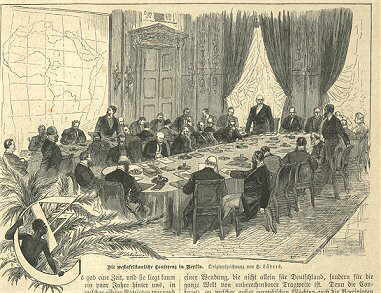
Exhibit 2PhotographUnknown; the file page carries no author and sources the image to Die Gartenlaube, 1884, 1884
The Berlin conference in session, an engraving of 1884
Held by
Wikimedia Commons, File:Afrikakonferenz.jpg
Rights
Public domain (Creative Commons Public Domain Mark on the file page)
Shows
a room of seated and standing men in frock coats around a long table, with a wall map behind them, as an illustrated weekly of 1884 drew the conference; the file page gives no artist
Does not show
any African delegate, because none attended; nor a border being drawn, which the Act's text does not contain; the event YAML's attribution to Adalbert von Rossler is not on the file page
Uzoigwe reads the notification article as the doctrine of spheres of influence and Article 35 as “the so-called doctrine of effective occupation that was to make the conquest of Africa such a murderous business”, and writes that by 1885 the broad lines of the final partition had already been drawn.2021He also writes that the conference did not partition Africa in the technical sense, and the two readings are set against each other in the disagreements below.22In the Chambre des députés on 28 juillet 1885, Ferry, a former premier, told the deputies that the Berlin conference had just translated into positive law the duty to combat the slave trade, and, over interruptions from the far left and the right, that “les races supérieures ont un droit vis-à-vis des races inférieures”.232425The sixth article and Ferry's sentence are the same claim in a treaty and in a speech, and the next three sections test it against what the Powers' own records say was done. (the reading of this thesis)
Notes 20 to 25
20G. N. Uzoigwe, European partition and conquest of Africa (1985)p. 28
21G. N. Uzoigwe, European partition and conquest of Africa (1985)p. 30
22G. N. Uzoigwe, European partition and conquest of Africa (1985)p. 30
23Jules Ferry, in the Chambre des députés, with the interruptions of Jules Maigne, de Guilloutet, Raoul Duval, Georges Périn and others, Jules Ferry, discours du 28 juillet 1885 sur la...§ head
24Jules Ferry, in the Chambre des députés, with the interruptions of Jules Maigne, de Guilloutet, Raoul Duval, Georges Périn and others, Jules Ferry, discours du 28 juillet 1885 sur la...§ berlin
25Jules Ferry, in the Chambre des députés, with the interruptions of Jules Maigne, de Guilloutet, Raoul Duval, Georges Périn and others, Jules Ferry, discours du 28 juillet 1885 sur la...§ races
2The rulers and the papers
Exhibit 3DocumentHendrik Witbooi, 30 May 1890
Hendrik Witbooi to Maharero, 30 May 1890, on German protection
te worden, van de Duitsche regering, maar lieve
kapitein ! weet gy wat gy gedaan hebt, en voor wien
gy gedaan heb, dat, wat gy gedaan hebt, of hebben
anderer menschen U ingeraden, of hebt U zelven uit
Uw eigen zelfstandige verlichte verstand gedaan?
miesschien hebt U alleen my zien voor staan, in Uw
hart, en voor Uw heel leven, als een hinderpaal, en
als een steen des aanstoots, zoo hebt U deze magtige
ander regering aangenomen, om my met deze magtige
man te verniedigen dat is miesschien al Uwe oogmerk,
waarom TU zoo gemaak hebt, maar het is zeer zwaar,
om te zeggen, en te weten, dat het U zeker zal gelukken,
of niet, maar het lyk my, U hebt niet genoegzaam op
Uwe kanft] gezien, voor Uw land en volk, en ook
Uwe nakomelingen, en ook niet voor Uwe kapiteinschapsreg,”) en U denk, dat U alle deze dingen van
U als zelfstandige kapitein zal behouden, nadat U my
zal verniedig hebben als het U geluk, zoo als U meent
maar lieve kapitein ! het zal U toch eindelyk zwaarlyk
berouwen, en gy zult eeuwig berouw hebben, dat U
Uwe land en regeringsreg in de handen der witte
menschen afgegeven hebben, want onze oorlog, wat
wy hebben, die is niet zoo erg, en zwaar, zoo als U
Void translation, not a published quotationby the German government; but dear captain! do you know what you have done, and for whom you have done it, what you have done, or have other people advised you, or have you done it yourself out of your own independent enlightened understanding? Perhaps you have seen only me standing before you, in your heart and for your whole life, as a hindrance and as a stumbling-block, and so you have accepted this mighty other government, to destroy me with this mighty man; that is perhaps your whole aim, why you have acted so; but it is very hard to say and to know whether it will surely succeed for you or not; but it seems to me you have not looked enough on your own side, for your land and people, and also your descendants, and also not for your right of captaincy, and you think that you will keep all these things as an independent captain after you will have destroyed me, if you succeed, as you suppose; but dear captain! it will in the end weigh heavily on you with regret, and you will have everlasting regret, that you have given your land and your right of government into the hands of the white people, for our war, the one we have, is not so bad and heavy as you
Locator
p. 79
Held by
Internet Archive (Die Dagboek van Hendrik Witbooi, Van Riebeeck Society, 1929, from the Regeringsargief, Windhoek), diedagboekvanhen00witb
Rights
The chief's own letter of 1890, public domain, with a Void translation beside it
In Mei 1890, Hendrik Witbooi wrote from Hornkrans to Maharero, chief of the Herero, that he had heard from a letter of Goering's that Maharero had given himself into German protection.26He wrote that every chief has his own people and land, over which he alone commands, and that every chief on this earth is only a place-holder of God, answerable to God alone.27He told Maharero “gy zult eeuwig berouw hebben”, that he would have everlasting regret, for giving his land and his right of government into the hands of the white people.28In June of the next year he wrote to a missionary that the Germans told the chiefs of the land to make friendship with them because other strong nations would seize their ground, but that it now looked as if the German was the man who wanted to seize the land.29
Notes 26 to 29
26Hendrik Witbooi, kaptein of the Witbooi Nama, Hornkrans, Die Dagboek van Hendrik Witbooi, kaptein van die... (1890)p. 77
27Hendrik Witbooi, kaptein of the Witbooi Nama, Hornkrans, Die Dagboek van Hendrik Witbooi, kaptein van die... (1890)p. 78
28Hendrik Witbooi, kaptein of the Witbooi Nama, Hornkrans, Die Dagboek van Hendrik Witbooi, kaptein van die... (1890)p. 79Exhibit 3
29Hendrik Witbooi, kaptein of the Witbooi Nama, Hornkrans, Die Dagboek van Hendrik Witbooi, kaptein van die... (1890)p. 105
Exhibit 4DocumentLobengula, King of Matabeleland, in a British record, 1889, read on 9 November 1893
Lobengula to Queen Victoria, 1889, as Labouchere read it to the Commons
HC Deb 09 November 1893 vol 18 cc543-627
British dominions. On October 15, 1889, Lord Knutsford, on a Petition signed by the two Dukes, Mr. Rhodes, Lord Gifford, and others, granted the Charter, by which the Company were empowered to use and retain the full benefit of concessions so far as they were valid, and to acquire, by concession or agreement, rights and jurisdictions for the purpose of government in the lands referred to, subject to the approval of the Secretary of State. He must now explain how this concession was obtained from Lobengula, for it appeared that he had always absolutely denied that he ever granted it on the terms which appeared on the face of the instrument. When Lobengula was told that he had granted a concession of this nature he sent two Indunas to the Cape, with orders (as could be seen on reference to the Blue Book) to discover, first, whether such a place as England existed; and next, whether, if they discovered that such a place did exist, there was such a person as the Queen of England; and if there was such a place and such a Monarch, they were to lay before her the following letter and to ask her advice on the subject:—
"To Her Majesty Queen Victoria, from Lobengula.
"Some time ago a party of white men came into my country, the principal one appearing to be a man named Rudd. They asked me for a place where they could dig for gold, and said they would give me certain things for the right to do so. I told them to bring it to me, and I would see what I would do. A document was read and presented to me for signature. I asked what it contained, and was told that in it were my words and the words of those men. I put my hand to it. About three months after I heard from other sources I had given the right to all the minerals in my country. I called a meeting of my Indunas and of the white men, and demanded a copy of the document. It was proved to me that I had signed away the right to minerals of the whole country to Rudd and his friends. I have since had a meeting of my Indunas, and they will not recognise the paper, as it contains neither my words nor the words of those who got it from me."
Locator
p. 546
Held by
UK Parliament, Historic Hansard, HC Deb 09 November 1893 vol 18 c546
Rights
Parliamentary record, public
In the Commons in November 1893, Labouchere read the letter Lobengula had sent to Queen Victoria after learning what he had signed: “A document was read and presented to me for signature. I asked what it contained, and was told that in it were my words and the words of those men. I put my hand to it. About three months after I heard from other sources I had given the right to all the minerals in my country”.30The Queen's reply, sent by Lord Knutsford, said that Lobengula was the ruler of his country, that the Englishmen who asked leave to dig had not gone with the Queen's authority, and that “A King gives a stranger an ox, not a whole herd of cattle”.31In August the king wrote again: “If the Queen hears that I have given away the whole country it is not so. I have no one in my country who knows how to write”.32The Crown's editor of treaties records the other side of the same exchange in a footnote: an agreement of February 1888 by which Lobengula undertook to make no treaty with any foreign State or Power ceding any part of his country without the sanction of the High Commissioner, and a concession granted on 30 October 1888 to the representatives of the British South Africa Company.33Labouchere told the House that in October, 1889, “without any further communication with Lobengula, the Company's Charter was granted”.34The concession itself is not in this record, so the king's account of the paper and the Company's are known here only as the British recorded both. (the reading of this thesis)
Notes 30 to 34
30Henry Labouchere in the House of Commons, reading Lobengula's letters of 1889 and Lord Knutsford's replies, Motion for Adjournment (Matabeleland), 9 November 1893p. 546Exhibit 4
31Henry Labouchere in the House of Commons, reading Lobengula's letters of 1889 and Lord Knutsford's replies, Motion for Adjournment (Matabeleland), 9 November 1893pp. 546 to 547
32Henry Labouchere in the House of Commons, reading Lobengula's letters of 1889 and Lord Knutsford's replies, Motion for Adjournment (Matabeleland), 9 November 1893p. 547
33Queen Victoria in Council (the Charter); Sir E. Hertslet (the footnote), Charter of Incorporation of the British South Africa... (1889)p. 174
34Henry Labouchere in the House of Commons, reading Lobengula's letters of 1889 and Lord Knutsford's replies, Motion for Adjournment (Matabeleland), 9 November 1893p. 547
The emperor who kept his throne was the most careful of the three with paper. (the reading of this thesis)On 14 May 1897, Menelik wrote to Rodd proposing that in any future misunderstanding between the Amharic and English versions of the treaty they had written, the French translation he enclosed “be the witness between us”, “as I have no interpreter with me who understands the English language well enough to compare the English and Amharic versions”.35An Ethiopian journal puts the battle of Adwa on March 1, 1896, with 11,000 casualties in total and nearly 43% of the Italian forces killed, wounded or missing.36Boahen's reading of the whole generation is that Africans were faced with two options, to surrender their sovereignty or to defend it, and that the great majority of them “did decide to defend their sovereignty and independence”.37
Notes 35 to 37
35Menelik II, King of Kings of Ethiopia, to James Rennell Rodd, The Emperor Menelek to Mr. Rodd (1897)p. 425
36Daniel K. Waktola, Challenging the Myth of Ethiopian Terrain Advantage (2024)p. 94
37A. Adu Boahen, Africa and the colonial challenge (1985)pp. 9 to 10
3The Congo
The Commons resolved on 20 May 1903 that the Government of the Congo Free State had at its inception “guaranteed to the Powers that its Native subjects should be governed with humanity, and that no trading monopoly or privilege should be permitted within its dominions”, and asked the Government to confer with the other signatories of the Berlin General Act “by virtue of which the Congo Free State exists”.3839The words “and both these guarantees having been constantly violated” were in the motion as Samuel moved it and were left out by amendment before the House agreed to it.4041Gorst told the House that “The evidence was perfectly overwhelming”.42
Notes 38 to 42
38Herbert Samuel, Sir John Gorst and the House of Commons, Congo Free State (1903)p. 1332
39Herbert Samuel, Sir John Gorst and the House of Commons, Congo Free State (1903)pp. 1307 to 1308
40Herbert Samuel, Sir John Gorst and the House of Commons, Congo Free State (1903)pp. 1307 to 1308
41Herbert Samuel, Sir John Gorst and the House of Commons, Congo Free State (1903)p. 1332
42Herbert Samuel, Sir John Gorst and the House of Commons, Congo Free State (1903)pp. 1307 to 1308
The consul who went up the river that year had known it before. (the reading of this thesis)At Bolobo, once one of the most important settlements on the south bank of the Upper Congo, the population “in the early days of civilized rule numbered fully 40,000 people”, and was believed to be not more than 7,000 or 8,000.43On the south shore of Stanley Pool, where fully 5,000 Bateke had lived in three towns, the great majority had crossed in one night to the French territory, and not 100 of the original people remained at Leopoldville.44Casement gave sleeping sickness “a prominent place” among the causes of the diminution of life he observed, and wrote that the people attributed their decrease to other causes as well, “and I think principally”, which is the consul's own judgement of what they told him.45The girl the report calls T 7 told him that when the State soldiers came to her village in the afternoon, “they began catching and tying the people, and killed lots of them”, and that she alone of those who ran escaped.46At Lake Mantumba the local official told him that men still came to him whose hands had been cut off by the Government soldiers, and Casement saw two cases himself, one of them “a young lad of 11 or 12 years of age, whose right hand was cut off at the wrist”.47
Notes 43 to 47
43Roger Casement, His Majesty's Consul at Boma, Correspondence and Report from His Majesty's Consul at... (1904)p. 27
44Roger Casement, His Majesty's Consul at Boma, Correspondence and Report from His Majesty's Consul at... (1904)p. 22
45Roger Casement, His Majesty's Consul at Boma, Correspondence and Report from His Majesty's Consul at... (1904)p. 21
46Roger Casement, His Majesty's Consul at Boma, Correspondence and Report from His Majesty's Consul at... (1904)p. 75Exhibit 5
47Roger Casement, His Majesty's Consul at Boma, Correspondence and Report from His Majesty's Consul at... (1904)p. 34
AnalysisThe finding of this thesis, from the rows below
Every count of the Congo's people in the record
Method Every figure a fetched document gives for a population of the Congo Free State or for its dead, one row per figure, with the document, what the figure counts, and the before and after or the total as the document states them. The consul's counts are of named places; the historian's are of the whole territory as others estimated it. No range is taken across the rows, because a town's people and a territory's dead are not the same quantity. The result is the number of rows.
Rows the analysis is computed from, each traced to an extract
The record holds four counts of four different things: one town, Bolobo, from fully 40,000 to 7,000 or 8,000; one shore of Stanley Pool, from fully 5,000 to not 100 at Leopoldville; the maximalist historians' roughly fifty per cent of the whole population; and the reform campaign's estimated 10 million, which Roes reports as Morel's and Hochschild's figure and the agnostics dispute. The two contemporary counts are the consul's, of places he had known before; the two totals are twentieth-century estimates that the one Tier B source held calls contested. Nothing in the primary record counts the whole.
Confidence moderate: the count of rows is exact, but two of the four figures are estimates reported at second hand by a historian describing a controversy, and the consul's counts are his own recollection of places against a missionary's belief. Against it the consul assigned a prominent place among the causes of the decrease to sleeping sickness (p21), and the Free State's commission put smallpox and sleeping sickness above every other cause (p117), so the counts measure a fall and not a cause; the commission also recorded that the Bateke crossed to the French bank, which is emigration, not death
scramble-for-africa
Exhibit 5DocumentA Congolese girl the Blue Book calls T 7, recorded by Roger Casement, 1903, printed February 1904
T 7's statement, as the British consul recorded it in 1903
T 7's Statement. \
States she belonged to the village of R*, where she lived with her grandmother. K*
was attacked by the State soldiers long ago. It was in S T's time. She docs not know if
he was with the soldiers, but she heard the bugle blow when they were going away. It was iu
the afternoon when they came, they began catching and tying the people, and killed lots of them.
A lot of people— she thinks perhaps fifty —ran away, and she was in the crowd with them, but
the soldiers came after them and killed them all but herself. She was small, and she «hd into the
bnsh. The people killed were many, and women— there were not many children. The children
had scattered when the soldiers eame, but she stayed with the big people, thinking she might
be safe.
When they were all killed she waited in the grass for two nights. She was very frightened,
and her throat was sore with thirst, and she looked about and at last she found some water- in a
pot. She stayed on in the grass a third night, and buffaloes came near her and she was very
frightened— and they went away. When the morning came she thought she would be better to
move, and went away and got up a tree. She was three days without food, and was very hungry.
In the tree she was near her grandmother's house, and she looked around and, seeing no soldiers,
she crept to her grandmother's house and got some food and got up the tree again. The
soldiers had gone away hunting tor buffaloes, and it was then she was able to get down from the
tree. The soldiers eame back, and they came towards the trees and bushes calling out :
" Now we see you ; come down, come down ! " This they used to do, so that people, thinking
they were really discovered, should give themselves up ; but she thought she would stay on, and
eo she stayed up the tree. Soon afterwards the soldiers went, but she was still afraid to come
Locator
p. 75
Held by
Internet Archive (Africa No. 1, 1904, Cd. 1933), CasementReport
Rights
Parliamentary paper of 1904, public domain
The Free State's own commission, sent after the report, found that when the prestations were not forthcoming the chiefs were arrested and some inhabitants taken at random, and that “often the women were held as hostages”; the State, it wrote, “has, for a long time, forbidden this practice, but has been unable to suppress it”.52Of the armed overseers it called sentries, the strangers detailed to a village were “by far the worst sort”.53On depopulation it agreed that from Stanley Pool to New Antwerp the banks of the river were almost deserted, and read the river people as having fled the impositions or been scattered rather than destroyed.54It then set every such cause below smallpox and sleeping sickness: “All of these causes of depopulation are secondary in importance”.55The two records agree on the hostages, the sentries and the emptying of the river, and divide on what the people died of. (the reading of this thesis)
Notes 52 to 55
52The Commission of Enquiry appointed by the Congo Free State Government (Janssens, Nisco, de Schumacher), The Congo (1906)p. 67
53The Commission of Enquiry appointed by the Congo Free State Government (Janssens, Nisco, de Schumacher), The Congo (1906)p. 70
54The Commission of Enquiry appointed by the Congo Free State Government (Janssens, Nisco, de Schumacher), The Congo (1906)p. 115
55The Commission of Enquiry appointed by the Congo Free State Government (Janssens, Nisco, de Schumacher), The Congo (1906)p. 117
4The desert
Exhibit 6DocumentLothar von Trotha, 2 October 1904
Trotha's proclamation to the Herero and his addendum to the troops, 2 October 1904
Ich der große General der Deutschen Soldaten sende diesen Brief
an das Volk der Herero.
Die Herero sind nicht mehr Deutsche Untertanen. Sie haben
gemordet und gestohlen, haben verwundeten Soldaten Ohren und Nasen
und andere Körperteile abgeschnitten und wollen jetzt aus Feigheit
nicht mehr kämpfen. Ich sage dem Volk: Jeder der einen der Kapitäne
an eine meiner Stationen als Gefangenen abliefert, erhält tausend
Mark, wer Samuel Maherero bringt, erhält fünftausend Mark. Das Volk
der Herero muß jedoch das Land verlassen. Wenn das Volk dies nicht
tut, so werde ich es mit dem Groot Rohr [kapholländisch, Geschütz,
Kanone] dazu zwingen.
Innerhalb der Deutschen Grenze wird jeder Herero mit oder ohne
Gewehr, mit oder ohne Vieh erschossen, ich nehme keine Weiber und
keine Kinder mehr auf, treibe sie zu ihrem Volke zurück oder lasse
auch auf sie schießen.
Dies sind meine Worte an das Volk der Herero.
Der große
General des mächtigen Deutschen Kaisers.
Dieser Erlaß ist bei den Appells den Truppen mitzuteilen mit dem
Hinzufügen, daß auch der Truppe, die einen der Kapitäne fängt, die
entsprechende Belohnung zu teil wird, und daß das Schießen auf
Weiber und Kinder so zu verstehen ist, daß über sie hinweggeschossen
wird, um sie zum Laufen zu zwingen. Ich nehme mit Bestimmtheit an,
daß dieser Erlaß dazu führen wird, keine männliche Gefangene mehr zu
machen, aber nicht zu Grausamkeiten gegen Weiber und Kinder
ausartet. Diese werden schon fortlaufen, wenn zweimal über sie
hinweggeschossen wird. Die Truppe wird sich des guten Rufes der
Deutschen Soldaten bewußt bleiben.
Der Kommandeur.
gez. v. Trotha
Generalleutnant.
Locator
whole document
Held by
German History in Documents and Images (Deutsches Historisches Institut Washington), from Bundesarchiv RKA 10.01 2089, Bl. 23, ghdi:document-5478
Rights
A 1904 military order, public domain; GHDI's transcription cited as the edition
The order the German commander signed at Osombo-Windhuk on 2 October 1904 reads, in its own German, “Innerhalb der Deutschen Grenze wird jeder Herero mit oder ohne Gewehr, mit oder ohne Vieh erschossen, ich nehme keine Weiber und keine Kinder mehr auf”, which Ciarlo's published translation renders “Any Herero found within the German frontier, with or without a gun, with or without cattle, will be shot. I spare neither women nor children”.5657The addendum to the troops says, in that translation, that the shooting at women and children “is to be understood as shooting above their heads”, and that the order will result in “no more male prisoners being taken”.58Gewald's translation of von Estorff has the officer writing that the people could still have been saved and pardoned, that “I suggested this to General von Trotha”, and “but hè wanted their total extermination”.59
Notes 56 to 59
56Lothar von Trotha, Kommandeur der Kaiserlichen Schutztruppe, Lothar von Trothas Vernichtungsbefehl (2. Oktober 1904)whole documentExhibit 6
57David Ciarlo (trans.), for German History in Documents and Images, Lothar von Trotha's Extermination Order (October 2, 1904) (2004)whole document
58David Ciarlo (trans.), for German History in Documents and Images, Lothar von Trotha's Extermination Order (October 2, 1904) (2004)whole document
59Jan-Bart Gewald, Imperial Germany and the Herero of Southern Africa (2004)pp. 62 to 63
The Herero causes are in this record as sworn statements taken by the British administration that replaced the German one. (the reading of this thesis)Daniel Kariko, an under-chief, swore that “Our people were compelled to work on farms, and the farmers had them chained up by the police and flogged without mercy for the slightest little thing”, that a German was declared not guilty of murdering a chief's daughter and then given three years on a new trial, and that “This decided us for war”.60Gottlob Kamatoto swore that after messages that the war was over, “seven Herero leaders came into the German camp to discuss peace terms”, and that at sunset “the seven peace envoys were caught and tied with ropes. They were led aside and shot”.61Gerard Kamaheke swore that he went in to Ombakaha with the chiefs Saul and Joel and 70 Herero soldiers, that the Germans opened fire, and that “I lay quite still and pretended to be dead”.62The same report prints the amnesty proclamation of 1st December 1905 that called the survivors in, “Come and lay down your arms, Hereros!”, and told them that Hendrik Witbooi had been killed by a German bullet.63A review in a South African journal records that in 1926 the report was withdrawn from circulation in libraries and archives throughout the British Empire.64
Notes 60 to 64
60The Administrator's Office, Windhuk (Union of South Africa military administration), for the Union Government, Report on the Natives of South-West Africa and their... (1918)pp. 54 to 55
61The Administrator's Office, Windhuk (Union of South Africa military administration), for the Union Government, Report on the Natives of South-West Africa and their... (1918)p. 59
62The Administrator's Office, Windhuk (Union of South Africa military administration), for the Union Government, Report on the Natives of South-West Africa and their... (1918)pp. 59 to 60
63The Administrator's Office, Windhuk (Union of South Africa military administration), for the Union Government, Report on the Natives of South-West Africa and their... (1918)pp. 102 to 103
64Mohamed Adhikari, 'Streams of blood and streams of money' (2008)§ bluebook
AnalysisThe finding of this thesis, from the rows below
Every count of the Herero in the record
Method Every figure a fetched document gives for the Herero people before and after the war of 1904, one row per figure, with the document, its producer, and the before, after and share as the document states them; where a document gives only a share the counts are blank, and where it gives a range the range is kept. No range is taken across the rows, because the rows do not count the same thing: two are estimates of a whole people, one is a share, one is a prisoner count. The result is the number of rows.
Rows the analysis is computed from, each traced to an extract
document
producer
before
after
share
Extract
Report on the Natives of South-West Africa (1918), p. 67
The record holds four counts of the Herero from three producers, and they do not agree: the British administration's 80,000 to 90,000 reduced to about 15,000; a missionary-quoting historian's no fewer than 80 per cent; a British campaigner of 1949, as the same historian quotes him, at all but 15,000 of 90,000; and the German parliament's research service, which reports 35,000 to 100,000 before and 14,000 to 25,000 after, and 7682 prisoners dead in the camps. Every count is a reconstruction after the fact, and the German paper says why: no exact figures on the size of the Herero people survive for before or after the war.
Confidence high for the count of rows; low for any share, which the rows do not agree on and which the German paper puts anywhere between 29 and 86 per cent. Against it the Blue Book was compiled in wartime by Germany's enemy and Adhikari calls it a work of propaganda that is nonetheless remarkably accurate; the Bundestag paper warns that its own ranges rest on missionaries' estimates before the war and on prisoner counts by the German military after it, and that no calculation allows for natural change in the population; Gewald's 80 per cent is stated without a base
scramble-for-africa
The counts do not agree, and the page states them as counts. (the reading of this thesis)The British report put the Herero at between 80,000 and 90,000 souls, of whom only about 15,000 were alive at the end of 1905, and Gewald writes that no fewer than 80 per cent of the Herero lost their lives and that the Nama lost at least 30 per cent of their people.697071The Bundestag's research service reports that 7682 prisoners died in the camps between October 1904 and March 1907, a death rate of 30 to 50 per cent, and sets the range of the whole from 29 to 86 per cent.7273The same paper summarises the critics of the genocide thesis, who hold that the camps were set up to save the Herero from certain death in the desert and that the counts are put far too high.74
Notes 69 to 74
69The Administrator's Office, Windhuk (Union of South Africa military administration), for the Union Government, Report on the Natives of South-West Africa and their... (1918)p. 67
70Jan-Bart Gewald, Imperial Germany and the Herero of Southern Africa (2004)pp. 60 to 61
71Jan-Bart Gewald, Imperial Germany and the Herero of Southern Africa (2004)pp. 74 to 75
72Wissenschaftliche Dienste des Deutschen Bundestages, Fachbereich XI (Geschichte, Zeitgeschichte und Politik), Die Niederschlagung des Hereroaufstandes 1903-1907 (2004)p. 19
73Wissenschaftliche Dienste des Deutschen Bundestages, Fachbereich XI (Geschichte, Zeitgeschichte und Politik), Die Niederschlagung des Hereroaufstandes 1903-1907 (2004)pp. 19 to 20
74Wissenschaftliche Dienste des Deutschen Bundestages, Fachbereich XI (Geschichte, Zeitgeschichte und Politik), Die Niederschlagung des Hereroaufstandes 1903-1907 (2004)p. 25
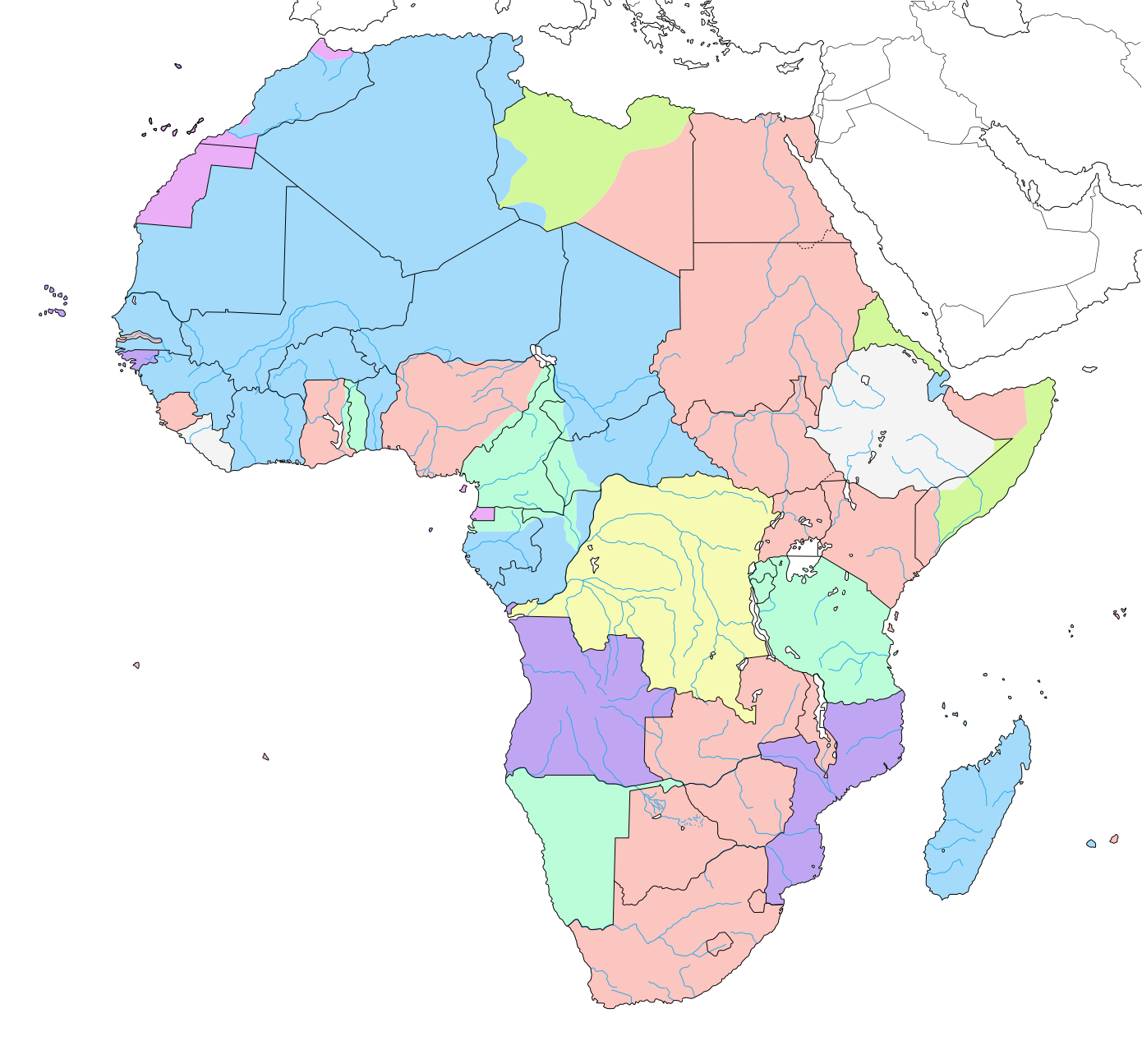
Exhibit 7MapEric Gaba (Wikimedia Commons user Sting), June 2007, corrected July 2011
Colonial Africa in 1913, drawn in 2007 with modern borders
CC BY-SA 3.0 (also GFDL and CC BY-SA 2.5, as the file page lists)
Shows
the areas of European control in 1913 as a contributor drew them from four reference atlases, laid over modern borders
Does not show
the map of 1885 or of 1913 as any treaty printed it; its own note says the limits of the areas of control may not be perfectly accurate, and no line on it is a document
Exhibit 8PhotographUnknown; the file page carries no photographer and sources the image to the second edition of Twain's King Leopold's Soliloquy, Boston, 1905, before 1905
Mutilated Congolese, a photograph reproduced in 1905
Public domain in the United States, published before 1931 (the file page's tag)
Shows
people the file page describes as mutilated Congolese children and adults, photographed before 1905 and printed in a pamphlet of the reform campaign
Does not show
who they are, where or when the photograph was taken, or who took it; the event YAML's caption, that a man looks at the hand and foot of his daughter, and its attribution to Alice Harris, are not on the file page and are not repeated here
The historiography
The European diplomatic account
Holders
Fitzmaurice for the British government (Commons, 20 November 1884); Ferry (Chambre des députés, 28 July 1885); the Crown's Charter to the British South Africa Company (1889); Lugard (1922); Robinson and Gallagher (1961); Brunschwig (1971); de Tessières (1972); Wesseling (1996); Pakenham (1991)
Ronald Robinson and John Gallagher, with Alice Denny, Africa and the Victorians (1961)Tier B, by a holder, not read free
Henri Brunschwig, Le partage de l'Afrique noire (1971)Tier B, by a holder, not read free
Yves de Tessières, Un épisode du partage de l'Afrique (1972)Tier B, by a holder, not read free
H. L. Wesseling, Divide and Rule (1996)Tier B, by a holder, not read free
Thomas Pakenham, The Scramble for Africa, 1876-1912 (1991)Tier B, by a holder, not read free
Claims
The conference settled rules between European states, not territory; the partition that followed was made by treaties, charters and conquest, justified in Paris as a duty of the superior races and in Britain as a mandate for the benefit of both Europe and Africa.
Omits
What the rules did to the peoples on the coasts they named, and the African rulers whose agreements the charters and treaties were built on.
in the conference, any European nation which, in the future, took possession
of an African coast or declared a ‘protectorate’ there, had to notify such
action to the signatory powers of the Berlin Act in order to have its claims
ratified. This was the so-called doctrine of spheres of influence to which
was linked the absurd concept of the hinterland, which came to be
interpreted to mean that possession of a coast also implied ownership of
its hinterland to an almost unlimited distance. Article 35 stipulated that
an occupier of any such coastal possessions had also to demonstrate that
it possessed sufficient ‘authority’ there ‘to protect existing rights, and, as
the case may be, freedom of trade and of transit under the conditions
agreed upon’. This was the so-called doctrine of effective occupation that
was to make the conquest of Africa such a murderous business.
Tested against the primary record
SupportedThe decision of territorial claims was not among the bases of the conference.
Rests on documents from: Plenipotentiaries at the Conference of Berlin; UK government.
The Under-Secretary told the Commons on 20 November 1884, with the conference sitting, that the decision of territorial claims was not among the bases of the conference, and the Act the fourteen plenipotentiaries signed lists six documents, none of which assigns a territory to a Power; Articles 34 and 35 speak only of future acts of possession on the coasts and of notifying the other signatories. Two producers, the British government and the signatory powers, and the Act is the parties' own text.
The 4 extracts it rests on
Lord Edmond Fitzmaurice, Under-Secretary of State for Foreign Affairs, answering Jacob Bright, Arthur Arnold and Sir Herbert Maxwell in the House of Commons, The West African Conference (Action of the English... (1884)whole document
HC Deb 20 November 1884 vol 294 cc57-8
MR. JACOB BRIGHT
asked the Under Secretary of State for Foreign Affairs, If he has seen the following statement from the London Correspondent of The Manchester Guardian , and if there is any truth in it:—
It is, I understand, finally decided that our representative at the forthcoming Conference on the Affairs of the Congo at Berlin shall he instructed to support with firmness the claims of Portugal, which had been practically conceded before the Conference was proposed?
LORD EDMOND FITZMAURICE
Her Majesty's Government must decline at present to give any information in regard to the instructions given to their Representatives; but I have already stated that the decision of territorial claims is not among the bases of the Conference.
MR. JACOB BRIGHT
What I wish to ask is this—Whether the noble Lord is not aware that the proposition for conceding the Sovereignty of the Congo to Portugal has been all but universally condemned in this House and in the country?
LORD EDMOND FITZMAURICE
I am aware that considerable hostility was manifested, both in this House and "elsewhere," towards the Treaty of last year.
MR. ARTHUR ARNOLD
asked whether, if the Conference at Berlin should arrive at any conclusion on this subject, it would be laid before this House before it was accepted?
LORD EDMOND FITZMAURICE
No, Sir; I am not aware that it would.
SIR HERBERT MAXWELL
May I ask whether it is true, as reported in The Times this morning, that a Committee of Experts has been appointed to arrange the details of the agreement; and, if that is the case, can the noble Lord say to whom the interests of Great Britain are to be entrusted?
LORD EDMOND FITZMAURICE
I cannot undertake from day to day to give information of the proceedings of the Conference, and for this reason—that a pledge of secrecy has been given by all the Powers in regard to those proceedings; and if I were to depart from the rule of this House in one particular I should be obliged to depart from it
from day to day, until I had departed from it altogether.
The Plenipotentiaries of Great Britain, Austria-Hungary, Belgium, Denmark, France, Germany, Italy, the Netherlands, Portugal, Russia, Spain, Sweden and Norway, Turkey and the United States, General Act of the Conference of Berlin, signed at... (1885)table of contents
Freedom of Trade in Basin of the Congo , &c.
1. A Declaration relative to freedom of trade in the basin of the
Congo, its embouchures and circumjacent regions, with other provisions connected therewith. (See p. 471.)
Slave Trade hy Sea or Land.
2. A Declaration relative to the slave trade, and the operations by
sea or land which furnish slaves to that trade. (See p. 474.)
Neutrality of Territories comprised in the Conventional Basin of the
Congo.
3. A Declaration relative to the neutrality of the territories comprised in the Conventional basin of the Congo. (See p. 474.)
Navigation of the Congo , &c.
4. An Act of Navigation for the Congo, which, while having regard
to local circumstances, extends to this river, its affluents, and the
waters in its system (“ eaux qui leur sont assimilees ”), the general
principles enunciated in Articles CVIII to CXYI of the Final Act of
the Congress of Vienna,* and intended to regulate, as between the
Signatory Powers of that Act, the free navigation of the waterways
separating or traversing several States — these said principles having
since then been applied by agreement to certain rivers of Europe and
America, but especially to the Danube with the modifications stipulated
by the Treaties of Paris (1856) f of Berlin (1878) J and of London
(1871 and 1883).§ (See p. 475.)
Navigation of the Niger.
5. An Act of Navigation for the Niger, which, while likewise
having regard to local circumstances, extends to this river and its
affluents the same principles as set forth in Articles CVIII to CXVI,
of the Final Act of the Congress of Vienna. (See p. 481.)
Future Occupations on the Coast of Africa.
6. A Declaration introducing into international relations certain
uniform rules with reference to future occupations on the coast of the
African Continent. (See p. 484.)
And deeming it expedient that all these several documents should
The Plenipotentiaries of Great Britain, Austria-Hungary, Belgium, Denmark, France, Germany, Italy, the Netherlands, Portugal, Russia, Spain, Sweden and Norway, Turkey and the United States, General Act of the Conference of Berlin, signed at... (1885)art. 34Exhibit 1
Art. XXXIV.f — Any Power which henceforth takes possession
of a tract of land on the coasts of the African Continent outside of its
present possessions, or which, being hitherto without such possessions,
shall acquire them, as well as the Power which assumes a Protectorate
there, shall accompany the respective act with a notification thereof,
addressed to the other Signatory Powers of the present Act, in order to
enable them, if need be, to make good any claims of their own.
The Plenipotentiaries of Great Britain, Austria-Hungary, Belgium, Denmark, France, Germany, Italy, the Netherlands, Portugal, Russia, Spain, Sweden and Norway, Turkey and the United States, General Act of the Conference of Berlin, signed at... (1885)art. 35
Art. XXXV. — The Signatory Powers of the present Act recognize
the obligation to insure the establishment of authority in regions
occupied by them on the coasts of the African Continent sufficient to
protect existing rights, and, as the case may be, freedom of trade and
of transit under the conditions agreed upon.
QualifiedThe occupation was a work of civilisation carried out for the mutual benefit of Europe and of the native races.
Rests on documents from: Congo Free State Government; Jules Ferry, in the Chambre des députés; Plenipotentiaries at the Conference of Berlin; Roger Casement, His Majesty's Consul at Boma.
Ferry said it and Article VI of the Act binds the Powers in the Congo basin to watch over the preservation of the native tribes; the Free State's own commission found women held as hostages for rubber and the British consul recorded hands cut off by government soldiers in the same basin. The words are in the record from the European side and the practice is in the record from the same side, so the claim is borne out as a statement of intent and contradicted as a description of the Congo; qualified.
The 4 extracts it rests on
Jules Ferry, in the Chambre des députés, with the interruptions of Jules Maigne, de Guilloutet, Raoul Duval, Georges Périn and others, Jules Ferry, discours du 28 juillet 1885 sur la...§ races
Messieurs, il faut parler plus haut et plus vrai ! il faut dire ouvertement qu'en effet les races supérieures ont un droit vis-à-vis des races inférieures... (Rume urs sur plusieurs bancs à l'extrême gauche .)
M. Jules Maigne . Oh ! vous osez dire cela dans le pays où ont été proclamés les droits de l'homme !
M. de Guilloutet . C'est la justification de l'esclavage et de la traite des nègres !
M. Jules Ferry . Si l'honorable M. Maigne a raison, si la déclaration des droits de l'homme a été écrite pour les noirs de l'Afrique équatoriale, alors de quel droit allez-vous leur imposer les échanges, les trafics ? Ils ne vous appellent pas ! ( Interruptions à l'extrême gauche et à droite. - Très bien ! très bien ! sur divers bancs à gauche .)
M. Raoul Duval . Nous ne voulons pas les leur imposer ! C'est vous qui les leur imposez !
M. Jules Maigne . Proposer et imposer sont choses fort différentes !
M. Georges Périn . Vous ne pouvez pas cependant faire des échanges forcés !
M. Jules Ferry . Je répète qu'il y a pour les races supérieures un droit, parce qu'il y a un devoir pour elles. Elles ont le devoir de civiliser les races inférieures... ( Marques d'approbation surles mêmes bancs à gauche - Nouvelles interruptions à l'extrême gauche et à droite .)
Void translation, not a published quotationGentlemen, we must speak louder and truer! We must say openly that indeed the superior races have a right with regard to the inferior races... (Murmurs on several benches of the far left.)
M. Jules Maigne. Oh! you dare to say that in the country where the rights of man were proclaimed!
M. de Guilloutet. It is the justification of slavery and of the trade in negroes!
M. Jules Ferry. If the honourable M. Maigne is right, if the declaration of the rights of man was written for the blacks of equatorial Africa, then by what right are you going to impose exchanges and trade on them? They do not call for you! (Interruptions on the far left and on the right. Very good! very good! on various benches of the left.)
M. Raoul Duval. We do not want to impose them on them! It is you who impose them!
M. Jules Maigne. To propose and to impose are very different things!
M. Georges Périn. You cannot, however, make forced exchanges!
M. Jules Ferry. I repeat that there is for the superior races a right, because there is a duty for them. They have the duty to civilise the inferior races... (Marks of approval on the same benches of the left. New interruptions on the far left and on the right.)
The Plenipotentiaries of Great Britain, Austria-Hungary, Belgium, Denmark, France, Germany, Italy, the Netherlands, Portugal, Russia, Spain, Sweden and Norway, Turkey and the United States, General Act of the Conference of Berlin, signed at... (1885)art. 6
Art. VI. — Provisions relative to Protection of the Natives , of Missionaries and Travellers, as well as relative to Religious Liberty.
Preservation and Improvement of Native Tribes ; Slavery, and the Slave
Trade.
All the Powers exercising sovereign rights or influence in the
aforesaid territories bind themselves to watch over the preservation
of the native tribes, and to care for the improvement of the conditions
of their moral and material well-being, and to help in suppressing
slavery, and especially the slave trade.
Religious and other Institutions. Civilization of Natives.
They shall, without distinction of creed or nation, protect and
favour all religions, scientific, or charitable institutions, and undertakings created and organized for the above ends, or which aim at
instructing the natives and bringing home to them the blessings of
civilization.
Protection of Missionaries, Scientists , and Explorers.
Christian missionaries, scientists and explorers, with their followers,
property, and collections, shall likewise be the objects of especial protection.
Religious Toleration.
Freedom of conscience and religious toleration are expressly
guaranteed to the natives, no less than to subjects and to foreigners.
Public Worship.
The free and public exercise of all forms of Divine worship, and
the right to build edifices for religious purposes, and to organize religious
missions belonging to all creeds, shall not be limited or fettered in any
way whatsoever.
Roger Casement, His Majesty's Consul at Boma, Correspondence and Report from His Majesty's Consul at... (1904)p. 34
had undoubtedly had an " awful past" at the hands of some of the officials who had
preceded him in the local administration, and that it would take -time for confidence to
be restored. Men, he said, still came to him whose hands had been cut off by the
Government soldiers during those evil days, and he said there were still many victims
of this species of mutilation in the surrounding country. Two cases of the kind
came to my actual notice while I was in the lake. One, a young man, both of whoso
hands had' been beaten off with the butt ends of rifles against a tree, the other a young
lad of 11 or 12 years of age, whose right hand was cut off at the wrist. Tins boy
described the circumstances of his mutilation, and, in answer to my inquiry, said that
although wounded at the time he was perfectly sensible of the severing of his wrist,
but lay still fearing that if he moved he would be killed! In both these cases tM
Government soldiers had been accompanied by white officers whose names were, given
to'me. 'Of sis natives (one a girl, three little boys, one youth, and one old woman)
who. had been mutilated in this way during the rubber regime, all except one were
dead at the date of my visit. The old woman had died at the beginning of this year,
and her .niece described to mo how the act of mutilation in her case. ha{l been
accomplished. The day I left Lake Man turn ba five men whose hands had been cut oft
came 'to the village of T * across the lake to see me, but hearing that I had already
gone away thev returned to their homes. A messenger came in to tell me, and I
sent to T * to find them, but they had then dispersed. Three of them subsequently
returned, but too late for me to see them. These were some of those, I presume,
to whom the official had referred, for they, came from the country in the vicinity ot
P * station. Statements of this character, made both by the two mutilated persons 1
The Commission of Enquiry appointed by the Congo Free State Government (Janssens, Nisco, de Schumacher), The Congo (1906)p. 67
but little to seek out the real culprit. The prestations were due from the village as a whole; when
they were not forthcoming the chiefs were arrested
and some of the inhabitants taken at random, often
the women were held as hostages. This system
had for its purpose the moral compulsion upon the
delinquents to stimulate their efforts in order to
liberate their chief or their wives. This proved efficacious and, perhaps, as we were often told, did
not appear in the eyes of the natives, imbued with
the idea of solidarity, so reprehensible as it would to
us. But whatever one may think of the ideas of the
natives, any procedure, such as the detention of the
women as hostages, outrages our notion of justice
too violently to be tolerated. The State has, for
a long time, forbidden this practice, but has been
unable to suppress it. Likewise the arrest of the
chiefs, who are not always personally to blame, has
the effect of diminishing their authority or even
The it-did-not-happen-at-Berlin account
Holders
Katzenellenbogen (1996); Craven (2015); Makamu Ngangula Mbela and Tekila Kapamba-Zay (Kinshasa, 2025), who ask the question in their title
Rests on
Matthew Craven, Between law and history (2015)Tier B, by a holder, not read free
Simon Katzenellenbogen, It Didn't Happen at Berlin (1996)Tier B, by a holder, not read free
Thomas Makamu Ngangula Mbela and Venant Tekila Kapamba-Zay, Y a-t-il réellement eu « partage » de l'Afrique à Berlin... (2025)Tier B, by a holder, not read free
Claims
It did not happen at Berlin, as the one chapter's title has it: the conference drew no border and allocated no territory, and the Act's logic, as the one article's title has it, was free trade; the boundaries were set elsewhere. Neither text could be read free, so the position is held here by its titles.
Omits
That the Act's rules for the coasts and its recognition of a free-trade basin defined by watersheds were themselves a claim on land whose owners were not consulted, as the African historians read it.
Tested against the primary record
SupportedThe General Act allocated no territory to any Power and drew no border.
Rests on documents from: Plenipotentiaries at the Conference of Berlin; UK government.
The Act's own list of its six documents and its Articles 34 and 35 name no Power's possession and no line; the British government told the Commons on 20 November 1884, with the conference sitting, that territorial claims were not among its bases. Two producers. The only line the Act draws is in Article I, the watershed and parallels that bound the free-trade basin, which is a limit on where a rule applies, not a grant of the land to anyone; the adjudication of the African account below carries that.
The 4 extracts it rests on
The Plenipotentiaries of Great Britain, Austria-Hungary, Belgium, Denmark, France, Germany, Italy, the Netherlands, Portugal, Russia, Spain, Sweden and Norway, Turkey and the United States, General Act of the Conference of Berlin, signed at... (1885)table of contents
Freedom of Trade in Basin of the Congo , &c.
1. A Declaration relative to freedom of trade in the basin of the
Congo, its embouchures and circumjacent regions, with other provisions connected therewith. (See p. 471.)
Slave Trade hy Sea or Land.
2. A Declaration relative to the slave trade, and the operations by
sea or land which furnish slaves to that trade. (See p. 474.)
Neutrality of Territories comprised in the Conventional Basin of the
Congo.
3. A Declaration relative to the neutrality of the territories comprised in the Conventional basin of the Congo. (See p. 474.)
Navigation of the Congo , &c.
4. An Act of Navigation for the Congo, which, while having regard
to local circumstances, extends to this river, its affluents, and the
waters in its system (“ eaux qui leur sont assimilees ”), the general
principles enunciated in Articles CVIII to CXYI of the Final Act of
the Congress of Vienna,* and intended to regulate, as between the
Signatory Powers of that Act, the free navigation of the waterways
separating or traversing several States — these said principles having
since then been applied by agreement to certain rivers of Europe and
America, but especially to the Danube with the modifications stipulated
by the Treaties of Paris (1856) f of Berlin (1878) J and of London
(1871 and 1883).§ (See p. 475.)
Navigation of the Niger.
5. An Act of Navigation for the Niger, which, while likewise
having regard to local circumstances, extends to this river and its
affluents the same principles as set forth in Articles CVIII to CXVI,
of the Final Act of the Congress of Vienna. (See p. 481.)
Future Occupations on the Coast of Africa.
6. A Declaration introducing into international relations certain
uniform rules with reference to future occupations on the coast of the
African Continent. (See p. 484.)
And deeming it expedient that all these several documents should
The Plenipotentiaries of Great Britain, Austria-Hungary, Belgium, Denmark, France, Germany, Italy, the Netherlands, Portugal, Russia, Spain, Sweden and Norway, Turkey and the United States, General Act of the Conference of Berlin, signed at... (1885)art. 34Exhibit 1
Art. XXXIV.f — Any Power which henceforth takes possession
of a tract of land on the coasts of the African Continent outside of its
present possessions, or which, being hitherto without such possessions,
shall acquire them, as well as the Power which assumes a Protectorate
there, shall accompany the respective act with a notification thereof,
addressed to the other Signatory Powers of the present Act, in order to
enable them, if need be, to make good any claims of their own.
The Plenipotentiaries of Great Britain, Austria-Hungary, Belgium, Denmark, France, Germany, Italy, the Netherlands, Portugal, Russia, Spain, Sweden and Norway, Turkey and the United States, General Act of the Conference of Berlin, signed at... (1885)art. 35
Art. XXXV. — The Signatory Powers of the present Act recognize
the obligation to insure the establishment of authority in regions
occupied by them on the coasts of the African Continent sufficient to
protect existing rights, and, as the case may be, freedom of trade and
of transit under the conditions agreed upon.
Lord Edmond Fitzmaurice, Under-Secretary of State for Foreign Affairs, answering Jacob Bright, Arthur Arnold and Sir Herbert Maxwell in the House of Commons, The West African Conference (Action of the English... (1884)whole document
HC Deb 20 November 1884 vol 294 cc57-8
MR. JACOB BRIGHT
asked the Under Secretary of State for Foreign Affairs, If he has seen the following statement from the London Correspondent of The Manchester Guardian , and if there is any truth in it:—
It is, I understand, finally decided that our representative at the forthcoming Conference on the Affairs of the Congo at Berlin shall he instructed to support with firmness the claims of Portugal, which had been practically conceded before the Conference was proposed?
LORD EDMOND FITZMAURICE
Her Majesty's Government must decline at present to give any information in regard to the instructions given to their Representatives; but I have already stated that the decision of territorial claims is not among the bases of the Conference.
MR. JACOB BRIGHT
What I wish to ask is this—Whether the noble Lord is not aware that the proposition for conceding the Sovereignty of the Congo to Portugal has been all but universally condemned in this House and in the country?
LORD EDMOND FITZMAURICE
I am aware that considerable hostility was manifested, both in this House and "elsewhere," towards the Treaty of last year.
MR. ARTHUR ARNOLD
asked whether, if the Conference at Berlin should arrive at any conclusion on this subject, it would be laid before this House before it was accepted?
LORD EDMOND FITZMAURICE
No, Sir; I am not aware that it would.
SIR HERBERT MAXWELL
May I ask whether it is true, as reported in The Times this morning, that a Committee of Experts has been appointed to arrange the details of the agreement; and, if that is the case, can the noble Lord say to whom the interests of Great Britain are to be entrusted?
LORD EDMOND FITZMAURICE
I cannot undertake from day to day to give information of the proceedings of the Conference, and for this reason—that a pledge of secrecy has been given by all the Powers in regard to those proceedings; and if I were to depart from the rule of this House in one particular I should be obliged to depart from it
from day to day, until I had departed from it altogether.
Cannot be tested from the free recordThe borders were set by later bilateral treaties.
Rests on an absence in the free record.
No delimitation treaty after 1885 is held as an extract in this record; Uzoigwe's chapter states that the treaties did the work, but that is a Tier B statement and the treaties themselves would settle it.
The extract it rests on
G. N. Uzoigwe, European partition and conquest of Africa (1985)p. 30
that the conference, contrary to popular opinion, did not partition Africa*®
is correct only in the most technical sense. To all intents and purposes
the appropriation of territory did take place at the conference and the
question of future appropriation is clearly implied in its decisions. By 1885,
in fact, the broad lines of the final partition of Africa had already been
drawn.
Cannot be tested from the free recordThe Act's importance is symbolic and legal, not territorial.
Rests on an absence in the free record.
Craven's argument could not be read and the Kinshasa article is paywalled, so the claim is known here only from two titles; the Act's text bears on what it allocated, not on what it came to mean.
The extract it rests on
The Plenipotentiaries of Great Britain, Austria-Hungary, Belgium, Denmark, France, Germany, Italy, the Netherlands, Portugal, Russia, Spain, Sweden and Norway, Turkey and the United States, General Act of the Conference of Berlin, signed at... (1885)table of contents
Freedom of Trade in Basin of the Congo , &c.
1. A Declaration relative to freedom of trade in the basin of the
Congo, its embouchures and circumjacent regions, with other provisions connected therewith. (See p. 471.)
Slave Trade hy Sea or Land.
2. A Declaration relative to the slave trade, and the operations by
sea or land which furnish slaves to that trade. (See p. 474.)
Neutrality of Territories comprised in the Conventional Basin of the
Congo.
3. A Declaration relative to the neutrality of the territories comprised in the Conventional basin of the Congo. (See p. 474.)
Navigation of the Congo , &c.
4. An Act of Navigation for the Congo, which, while having regard
to local circumstances, extends to this river, its affluents, and the
waters in its system (“ eaux qui leur sont assimilees ”), the general
principles enunciated in Articles CVIII to CXYI of the Final Act of
the Congress of Vienna,* and intended to regulate, as between the
Signatory Powers of that Act, the free navigation of the waterways
separating or traversing several States — these said principles having
since then been applied by agreement to certain rivers of Europe and
America, but especially to the Danube with the modifications stipulated
by the Treaties of Paris (1856) f of Berlin (1878) J and of London
(1871 and 1883).§ (See p. 475.)
Navigation of the Niger.
5. An Act of Navigation for the Niger, which, while likewise
having regard to local circumstances, extends to this river and its
affluents the same principles as set forth in Articles CVIII to CXVI,
of the Final Act of the Congress of Vienna. (See p. 481.)
Future Occupations on the Coast of Africa.
6. A Declaration introducing into international relations certain
uniform rules with reference to future occupations on the coast of the
African Continent. (See p. 484.)
And deeming it expedient that all these several documents should
The African historians' account (the UNESCO General History)
To all intents and purposes the appropriation of territory took place at the conference; Articles 34 and 35 became the doctrine of effective occupation that made the conquest murderous; and the great majority of African rulers chose to defend their sovereignty, some of them, at Adwa, successfully.
Omits
The Act's own silence on any territory, which the same chapter concedes in the words 'in the most technical sense', and the treaties Africans signed with the Europeans, which the account reads as misunderstood without holding the treaties.
Tested against the primary record
QualifiedTo all intents and purposes the appropriation of territory took place at the conference.
Rests on documents from: Plenipotentiaries at the Conference of Berlin; UK government.
The Act names no Power's territory and the British government said territorial claims were not on its agenda, so the claim is contradicted as a matter of text; but Article I bounds a basin by watersheds and parallels in which the Powers' rules run, and Articles 34 and 35 lay down how future possessions on the coasts will be recognised, which is what Uzoigwe means by the appropriation being implied. Two producers, both European: qualified, and the position's own 'in the most technical sense' concedes the text.
The 5 extracts it rests on
The Plenipotentiaries of Great Britain, Austria-Hungary, Belgium, Denmark, France, Germany, Italy, the Netherlands, Portugal, Russia, Spain, Sweden and Norway, Turkey and the United States, General Act of the Conference of Berlin, signed at... (1885)table of contents
Freedom of Trade in Basin of the Congo , &c.
1. A Declaration relative to freedom of trade in the basin of the
Congo, its embouchures and circumjacent regions, with other provisions connected therewith. (See p. 471.)
Slave Trade hy Sea or Land.
2. A Declaration relative to the slave trade, and the operations by
sea or land which furnish slaves to that trade. (See p. 474.)
Neutrality of Territories comprised in the Conventional Basin of the
Congo.
3. A Declaration relative to the neutrality of the territories comprised in the Conventional basin of the Congo. (See p. 474.)
Navigation of the Congo , &c.
4. An Act of Navigation for the Congo, which, while having regard
to local circumstances, extends to this river, its affluents, and the
waters in its system (“ eaux qui leur sont assimilees ”), the general
principles enunciated in Articles CVIII to CXYI of the Final Act of
the Congress of Vienna,* and intended to regulate, as between the
Signatory Powers of that Act, the free navigation of the waterways
separating or traversing several States — these said principles having
since then been applied by agreement to certain rivers of Europe and
America, but especially to the Danube with the modifications stipulated
by the Treaties of Paris (1856) f of Berlin (1878) J and of London
(1871 and 1883).§ (See p. 475.)
Navigation of the Niger.
5. An Act of Navigation for the Niger, which, while likewise
having regard to local circumstances, extends to this river and its
affluents the same principles as set forth in Articles CVIII to CXVI,
of the Final Act of the Congress of Vienna. (See p. 481.)
Future Occupations on the Coast of Africa.
6. A Declaration introducing into international relations certain
uniform rules with reference to future occupations on the coast of the
African Continent. (See p. 484.)
And deeming it expedient that all these several documents should
The Plenipotentiaries of Great Britain, Austria-Hungary, Belgium, Denmark, France, Germany, Italy, the Netherlands, Portugal, Russia, Spain, Sweden and Norway, Turkey and the United States, General Act of the Conference of Berlin, signed at... (1885)art. 34Exhibit 1
Art. XXXIV.f — Any Power which henceforth takes possession
of a tract of land on the coasts of the African Continent outside of its
present possessions, or which, being hitherto without such possessions,
shall acquire them, as well as the Power which assumes a Protectorate
there, shall accompany the respective act with a notification thereof,
addressed to the other Signatory Powers of the present Act, in order to
enable them, if need be, to make good any claims of their own.
The Plenipotentiaries of Great Britain, Austria-Hungary, Belgium, Denmark, France, Germany, Italy, the Netherlands, Portugal, Russia, Spain, Sweden and Norway, Turkey and the United States, General Act of the Conference of Berlin, signed at... (1885)art. 35
Art. XXXV. — The Signatory Powers of the present Act recognize
the obligation to insure the establishment of authority in regions
occupied by them on the coasts of the African Continent sufficient to
protect existing rights, and, as the case may be, freedom of trade and
of transit under the conditions agreed upon.
The Plenipotentiaries of Great Britain, Austria-Hungary, Belgium, Denmark, France, Germany, Italy, the Netherlands, Portugal, Russia, Spain, Sweden and Norway, Turkey and the United States, General Act of the Conference of Berlin, signed at... (1885)art. 1
Art. I. — -The trade of all nations shall enjoy complete freedom : —
Basin of the Congo Defined.
1. In all the regions forming the basin of the Congo and its outlets.
This basin is bounded by the watersheds (or mountain ridges) of the
adjacent basins, namely, in particular, those of the Niari, the Ogowe,
the Schari, and the Nile on the north ; by the eastern watershed line
of the affluents of Lake Tanganyika on the east ; and by the watersheds
of the basins of the Zambesi and the Loge on the south. It therefore
comprises all the regions watered by the Congo and its affluents, including Lake Tanganyika, with its eastern tributaries.
Lord Edmond Fitzmaurice, Under-Secretary of State for Foreign Affairs, answering Jacob Bright, Arthur Arnold and Sir Herbert Maxwell in the House of Commons, The West African Conference (Action of the English... (1884)whole document
HC Deb 20 November 1884 vol 294 cc57-8
MR. JACOB BRIGHT
asked the Under Secretary of State for Foreign Affairs, If he has seen the following statement from the London Correspondent of The Manchester Guardian , and if there is any truth in it:—
It is, I understand, finally decided that our representative at the forthcoming Conference on the Affairs of the Congo at Berlin shall he instructed to support with firmness the claims of Portugal, which had been practically conceded before the Conference was proposed?
LORD EDMOND FITZMAURICE
Her Majesty's Government must decline at present to give any information in regard to the instructions given to their Representatives; but I have already stated that the decision of territorial claims is not among the bases of the Conference.
MR. JACOB BRIGHT
What I wish to ask is this—Whether the noble Lord is not aware that the proposition for conceding the Sovereignty of the Congo to Portugal has been all but universally condemned in this House and in the country?
LORD EDMOND FITZMAURICE
I am aware that considerable hostility was manifested, both in this House and "elsewhere," towards the Treaty of last year.
MR. ARTHUR ARNOLD
asked whether, if the Conference at Berlin should arrive at any conclusion on this subject, it would be laid before this House before it was accepted?
LORD EDMOND FITZMAURICE
No, Sir; I am not aware that it would.
SIR HERBERT MAXWELL
May I ask whether it is true, as reported in The Times this morning, that a Committee of Experts has been appointed to arrange the details of the agreement; and, if that is the case, can the noble Lord say to whom the interests of Great Britain are to be entrusted?
LORD EDMOND FITZMAURICE
I cannot undertake from day to day to give information of the proceedings of the Conference, and for this reason—that a pledge of secrecy has been given by all the Powers in regard to those proceedings; and if I were to depart from the rule of this House in one particular I should be obliged to depart from it
from day to day, until I had departed from it altogether.
SupportedArticle 35's requirement of authority sufficient to protect existing rights was the doctrine of effective occupation, and Article 34's notification rule the doctrine of spheres of influence.
Rests on documents from: Plenipotentiaries at the Conference of Berlin; UK government.
Article 35 says what Uzoigwe quotes it as saying, Article 34 is the notification rule he names spheres of influence, and both are confined to the coasts; the British government's answer of 20 November 1884 shows the conference was understood in London as rule-making. Two producers.
The 3 extracts it rests on
The Plenipotentiaries of Great Britain, Austria-Hungary, Belgium, Denmark, France, Germany, Italy, the Netherlands, Portugal, Russia, Spain, Sweden and Norway, Turkey and the United States, General Act of the Conference of Berlin, signed at... (1885)art. 35
Art. XXXV. — The Signatory Powers of the present Act recognize
the obligation to insure the establishment of authority in regions
occupied by them on the coasts of the African Continent sufficient to
protect existing rights, and, as the case may be, freedom of trade and
of transit under the conditions agreed upon.
The Plenipotentiaries of Great Britain, Austria-Hungary, Belgium, Denmark, France, Germany, Italy, the Netherlands, Portugal, Russia, Spain, Sweden and Norway, Turkey and the United States, General Act of the Conference of Berlin, signed at... (1885)art. 34Exhibit 1
Art. XXXIV.f — Any Power which henceforth takes possession
of a tract of land on the coasts of the African Continent outside of its
present possessions, or which, being hitherto without such possessions,
shall acquire them, as well as the Power which assumes a Protectorate
there, shall accompany the respective act with a notification thereof,
addressed to the other Signatory Powers of the present Act, in order to
enable them, if need be, to make good any claims of their own.
Lord Edmond Fitzmaurice, Under-Secretary of State for Foreign Affairs, answering Jacob Bright, Arthur Arnold and Sir Herbert Maxwell in the House of Commons, The West African Conference (Action of the English... (1884)whole document
HC Deb 20 November 1884 vol 294 cc57-8
MR. JACOB BRIGHT
asked the Under Secretary of State for Foreign Affairs, If he has seen the following statement from the London Correspondent of The Manchester Guardian , and if there is any truth in it:—
It is, I understand, finally decided that our representative at the forthcoming Conference on the Affairs of the Congo at Berlin shall he instructed to support with firmness the claims of Portugal, which had been practically conceded before the Conference was proposed?
LORD EDMOND FITZMAURICE
Her Majesty's Government must decline at present to give any information in regard to the instructions given to their Representatives; but I have already stated that the decision of territorial claims is not among the bases of the Conference.
MR. JACOB BRIGHT
What I wish to ask is this—Whether the noble Lord is not aware that the proposition for conceding the Sovereignty of the Congo to Portugal has been all but universally condemned in this House and in the country?
LORD EDMOND FITZMAURICE
I am aware that considerable hostility was manifested, both in this House and "elsewhere," towards the Treaty of last year.
MR. ARTHUR ARNOLD
asked whether, if the Conference at Berlin should arrive at any conclusion on this subject, it would be laid before this House before it was accepted?
LORD EDMOND FITZMAURICE
No, Sir; I am not aware that it would.
SIR HERBERT MAXWELL
May I ask whether it is true, as reported in The Times this morning, that a Committee of Experts has been appointed to arrange the details of the agreement; and, if that is the case, can the noble Lord say to whom the interests of Great Britain are to be entrusted?
LORD EDMOND FITZMAURICE
I cannot undertake from day to day to give information of the proceedings of the Conference, and for this reason—that a pledge of secrecy has been given by all the Powers in regard to those proceedings; and if I were to depart from the rule of this House in one particular I should be obliged to depart from it
from day to day, until I had departed from it altogether.
QualifiedThe great majority of African rulers chose to defend their sovereignty.
Rests on documents from: Menelik II, King of Kings of Ethiopia; Hendrik Witbooi, kaptein of the Witbooi Nama; Parliament of the United Kingdom; Administrator's Office, Windhuk (Union of South Africa).
Three rulers speak in this record and all three defend a sovereignty: Witbooi tells Maharero he has given his land and his right of government into the hands of the white people, Lobengula tells the Queen he has not given away the whole country, Menelik proposes that a French text be the witness between the parties because he cannot compare the English with the Amharic; Daniel Kariko's affidavit says the Herero chose war. Three rulers and one under-chief are not the majority the claim counts, so the claim is borne out for every ruler this record holds and untested for the rest: qualified. Four producers on three sides.
The 4 extracts it rests on
Hendrik Witbooi, kaptein of the Witbooi Nama, Hornkrans, Die Dagboek van Hendrik Witbooi, kaptein van die... (1890)p. 79Exhibit 3
te worden, van de Duitsche regering, maar lieve
kapitein ! weet gy wat gy gedaan hebt, en voor wien
gy gedaan heb, dat, wat gy gedaan hebt, of hebben
anderer menschen U ingeraden, of hebt U zelven uit
Uw eigen zelfstandige verlichte verstand gedaan?
miesschien hebt U alleen my zien voor staan, in Uw
hart, en voor Uw heel leven, als een hinderpaal, en
als een steen des aanstoots, zoo hebt U deze magtige
ander regering aangenomen, om my met deze magtige
man te verniedigen dat is miesschien al Uwe oogmerk,
waarom TU zoo gemaak hebt, maar het is zeer zwaar,
om te zeggen, en te weten, dat het U zeker zal gelukken,
of niet, maar het lyk my, U hebt niet genoegzaam op
Uwe kanft] gezien, voor Uw land en volk, en ook
Uwe nakomelingen, en ook niet voor Uwe kapiteinschapsreg,”) en U denk, dat U alle deze dingen van
U als zelfstandige kapitein zal behouden, nadat U my
zal verniedig hebben als het U geluk, zoo als U meent
maar lieve kapitein ! het zal U toch eindelyk zwaarlyk
berouwen, en gy zult eeuwig berouw hebben, dat U
Uwe land en regeringsreg in de handen der witte
menschen afgegeven hebben, want onze oorlog, wat
wy hebben, die is niet zoo erg, en zwaar, zoo als U
Void translation, not a published quotationby the German government; but dear captain! do you know what you have done, and for whom you have done it, what you have done, or have other people advised you, or have you done it yourself out of your own independent enlightened understanding? Perhaps you have seen only me standing before you, in your heart and for your whole life, as a hindrance and as a stumbling-block, and so you have accepted this mighty other government, to destroy me with this mighty man; that is perhaps your whole aim, why you have acted so; but it is very hard to say and to know whether it will surely succeed for you or not; but it seems to me you have not looked enough on your own side, for your land and people, and also your descendants, and also not for your right of captaincy, and you think that you will keep all these things as an independent captain after you will have destroyed me, if you succeed, as you suppose; but dear captain! it will in the end weigh heavily on you with regret, and you will have everlasting regret, that you have given your land and your right of government into the hands of the white people, for our war, the one we have, is not so bad and heavy as you
Henry Labouchere in the House of Commons, reading Lobengula's letters of 1889 and Lord Knutsford's replies, Motion for Adjournment (Matabeleland), 9 November 1893p. 547
The advice was practically to be very careful about giving concessions, and under no circumstances to give an exclusive concession. The Indunas returned to Matabeleland with this letter from the Queen. On August 10 Lobengula writes—
The white people are troubling me very much about gold. If the Queen hears that I have given away the whole country it is not so. I have no one in my country who knows how to write. I do not understand where the dispute is, because I have no knowledge of writing. I thank the Queen for the word which my messengers gave me by mouth, that the Queen says I am not to let anyone dig for gold in my country except to dig for me as my servants.
That was how Lobengula understood the letter of the Queen. In October, 1889, without any further communication with Lobengula, the Company's Charter was granted. This change was notified to Lobengula in the following letter from the Queen, and the document was a very important one:—
Menelik II, King of Kings of Ethiopia, to James Rennell Rodd, The Emperor Menelek to Mr. Rodd (1897)p. 425
The Emperor Menelek to Mr. Rodd.
(Translation.)
From Menelek II, by the grace of God, King of Kings of Ethiopia,
Conquering Lion of the tribe of Judah.
May this reach James Rennell Rodd.
Peace be unto you.
With reference to the Treaty which we have written in the Amharic
and English languages at Adis Abbaba, as I have no interpreter with
me who understands the English language well enough to compare the
English and Amharic versions, if by any possibility in the future there
should ever be found any misunderstanding between the Amharic
and English versions in any of the Articles of this Treaty, let this translation, which is written in the French language, and which I enclose in
this letter, be the witness between us, and if you accept this proposal,
send me word of your acceptance by letter.
Dated 7th Genbot, 1899 (14th May, 1897).
(Seal of His Majesty the Emperor Menelek II.)
The Administrator's Office, Windhuk (Union of South Africa military administration), for the Union Government, Report on the Natives of South-West Africa and their... (1918)pp. 54 to 55
Under-Chief Daniel Kariko states on oath : —
Our people were compelled to work on farms, and the farmers had them
chained up by the police and flogged without mercy for the slightest little
thing. . . . Then the wite of Barmenias Zerua (the daughter-in-law of
Chief Zacharias Zerua of Otjimbingwe) was cruelly murdered in cold blood
near Omaruru by a German named Dietrich. She was shot by him 14 days
after her baby was born because she refused to be false to Herero law and to
her own husband. ‘This broke our hearts, because the family of Zerua is a
great old Herero family from which many big chiefs had come in past years, and
nearly all the reigning chiefs in 1903 were related to the Zerua family. We
were more than astonished too when the German murderer was declared not
guilty and liberated.. This decided us for war. Later on we heard that the.
murderer had been re-arrested and on a new trial given three years. Three
years for a chief’s daughter’s life when we ourselves would have sentenced a
Herero murderer to death. We could see then that there was no justice for
us and no protection. Dietrich was released from gaol after a short time
and made an Under-Officer of the German troops who shot down our men,
women, and children in the rebellion.
The rulers' own record
Holders
Hendrik Witbooi (letters of 1890 and 1891); Lobengula (letters to Queen Victoria of 1889, as read to the Commons); Menelik II (letter to Rodd, 1897)
Each chief is a sovereign answerable to God alone; the Germans say they protect the chiefs against other nations but it is the Germans who want the land; a paper signed was not the paper read out; and where two languages may disagree the emperor proposes the version that should be the witness between the parties.
Omits
The wars the rulers fought with one another, which Witbooi's own letter to Maharero is about, and the rulers who did make the treaties the Europeans held.
Tested against the primary record
QualifiedThe concession Lobengula signed was read to him as containing his words and gave away more than he had granted.
Rests on documents from: Queen Victoria in Council; Parliament of the United Kingdom.
The king's two letters say so, and the Crown's editor records that a concession was granted on 30 October 1888 and that the Company was chartered to use it 'so far as they are valid'. The letters and the footnote are both British records of the exchange, so under Rule A the verdict is capped at qualified: the papers show a king who denied the paper and a Crown that reserved the question of validity, and the concession itself is not held.
The 3 extracts it rests on
Henry Labouchere in the House of Commons, reading Lobengula's letters of 1889 and Lord Knutsford's replies, Motion for Adjournment (Matabeleland), 9 November 1893p. 546Exhibit 4
HC Deb 09 November 1893 vol 18 cc543-627
British dominions. On October 15, 1889, Lord Knutsford, on a Petition signed by the two Dukes, Mr. Rhodes, Lord Gifford, and others, granted the Charter, by which the Company were empowered to use and retain the full benefit of concessions so far as they were valid, and to acquire, by concession or agreement, rights and jurisdictions for the purpose of government in the lands referred to, subject to the approval of the Secretary of State. He must now explain how this concession was obtained from Lobengula, for it appeared that he had always absolutely denied that he ever granted it on the terms which appeared on the face of the instrument. When Lobengula was told that he had granted a concession of this nature he sent two Indunas to the Cape, with orders (as could be seen on reference to the Blue Book) to discover, first, whether such a place as England existed; and next, whether, if they discovered that such a place did exist, there was such a person as the Queen of England; and if there was such a place and such a Monarch, they were to lay before her the following letter and to ask her advice on the subject:—
"To Her Majesty Queen Victoria, from Lobengula.
"Some time ago a party of white men came into my country, the principal one appearing to be a man named Rudd. They asked me for a place where they could dig for gold, and said they would give me certain things for the right to do so. I told them to bring it to me, and I would see what I would do. A document was read and presented to me for signature. I asked what it contained, and was told that in it were my words and the words of those men. I put my hand to it. About three months after I heard from other sources I had given the right to all the minerals in my country. I called a meeting of my Indunas and of the white men, and demanded a copy of the document. It was proved to me that I had signed away the right to minerals of the whole country to Rudd and his friends. I have since had a meeting of my Indunas, and they will not recognise the paper, as it contains neither my words nor the words of those who got it from me."
Henry Labouchere in the House of Commons, reading Lobengula's letters of 1889 and Lord Knutsford's replies, Motion for Adjournment (Matabeleland), 9 November 1893p. 547
The advice was practically to be very careful about giving concessions, and under no circumstances to give an exclusive concession. The Indunas returned to Matabeleland with this letter from the Queen. On August 10 Lobengula writes—
The white people are troubling me very much about gold. If the Queen hears that I have given away the whole country it is not so. I have no one in my country who knows how to write. I do not understand where the dispute is, because I have no knowledge of writing. I thank the Queen for the word which my messengers gave me by mouth, that the Queen says I am not to let anyone dig for gold in my country except to dig for me as my servants.
That was how Lobengula understood the letter of the Queen. In October, 1889, without any further communication with Lobengula, the Company's Charter was granted. This change was notified to Lobengula in the following letter from the Queen, and the document was a very important one:—
Queen Victoria in Council (the Charter); Sir E. Hertslet (the footnote), Charter of Incorporation of the British South Africa... (1889)p. 174
t On the llth Febrnarj, 1888, an Agreement was entered into by
Lobengnla, Ruler of the tribe known as the Amandebele, together with the
Mashona and Makakalalca, tributaries of the same, by which he agreed, on
behalf of himself and people, that he would refrain from entering into a.ny
correspondence or Treaty with any foreign State or Power to sell, alienate,
or cede, or permit or coiaitenance any sale, alienation, or cession of the
whole or any part of the said Amandebele country under liis chieftainship,
or upon_any other subject, without the previous knowledge and sanction of
Her Majesty's High Commissioner for South Africa (S.P., vol. Ixxix, p. 868) ;
and on the 30th October, 1888, a Concession was granted by Lobengu'a,
King of Matabeleland, to the representatives of the British South Africa
Company.
QualifiedThe German protection Maharero accepted in 1890 would cost him his land and his right of government.
Rests on documents from: Lothar von Trotha, Kommandeur der Kaiserlichen Schutztruppe; Hendrik Witbooi, kaptein of the Witbooi Nama; Administrator's Office, Windhuk (Union of South Africa).
Witbooi wrote it in May 1890 and repeated in June 1891 that the Germans said they protected the chiefs against other nations but seemed to be the man who wanted the land; fourteen years later the German commander's order told the Herero to leave the country, and a Herero under-chief swore that their people had been compelled to work on farms and flogged. The order is the German army's own record, the affidavit is a British one, the letters the chief's own: three producers agree, but the order and the affidavit describe 1904, not the terms of 1890, so the prediction is borne out by what followed rather than tested against the protection treaty itself, which is not held: qualified.
The 4 extracts it rests on
Hendrik Witbooi, kaptein of the Witbooi Nama, Hornkrans, Die Dagboek van Hendrik Witbooi, kaptein van die... (1890)p. 79Exhibit 3
te worden, van de Duitsche regering, maar lieve
kapitein ! weet gy wat gy gedaan hebt, en voor wien
gy gedaan heb, dat, wat gy gedaan hebt, of hebben
anderer menschen U ingeraden, of hebt U zelven uit
Uw eigen zelfstandige verlichte verstand gedaan?
miesschien hebt U alleen my zien voor staan, in Uw
hart, en voor Uw heel leven, als een hinderpaal, en
als een steen des aanstoots, zoo hebt U deze magtige
ander regering aangenomen, om my met deze magtige
man te verniedigen dat is miesschien al Uwe oogmerk,
waarom TU zoo gemaak hebt, maar het is zeer zwaar,
om te zeggen, en te weten, dat het U zeker zal gelukken,
of niet, maar het lyk my, U hebt niet genoegzaam op
Uwe kanft] gezien, voor Uw land en volk, en ook
Uwe nakomelingen, en ook niet voor Uwe kapiteinschapsreg,”) en U denk, dat U alle deze dingen van
U als zelfstandige kapitein zal behouden, nadat U my
zal verniedig hebben als het U geluk, zoo als U meent
maar lieve kapitein ! het zal U toch eindelyk zwaarlyk
berouwen, en gy zult eeuwig berouw hebben, dat U
Uwe land en regeringsreg in de handen der witte
menschen afgegeven hebben, want onze oorlog, wat
wy hebben, die is niet zoo erg, en zwaar, zoo als U
Void translation, not a published quotationby the German government; but dear captain! do you know what you have done, and for whom you have done it, what you have done, or have other people advised you, or have you done it yourself out of your own independent enlightened understanding? Perhaps you have seen only me standing before you, in your heart and for your whole life, as a hindrance and as a stumbling-block, and so you have accepted this mighty other government, to destroy me with this mighty man; that is perhaps your whole aim, why you have acted so; but it is very hard to say and to know whether it will surely succeed for you or not; but it seems to me you have not looked enough on your own side, for your land and people, and also your descendants, and also not for your right of captaincy, and you think that you will keep all these things as an independent captain after you will have destroyed me, if you succeed, as you suppose; but dear captain! it will in the end weigh heavily on you with regret, and you will have everlasting regret, that you have given your land and your right of government into the hands of the white people, for our war, the one we have, is not so bad and heavy as you
Hendrik Witbooi, kaptein of the Witbooi Nama, Hornkrans, Die Dagboek van Hendrik Witbooi, kaptein van die... (1890)p. 105
op deze grond van ons rooi menschen, en ik kan niet
verstaan, wat de eigenlyke voornemens is van de
Duitschters hy zeg tot de hoofden van deze land,
dat zy met hem vriendschap maken, omdat de andere
sterke naties hunne grond zal vatten, maar het lyk
nu, dat hy die man is wat de land wil vatten, ik heb
Void translation, not a published quotationon this ground of ours, of the red people, and I cannot understand what the real intentions of the Germans are; he says to the chiefs of this land that they should make friendship with him, because the other strong nations will seize their ground; but it looks now as if he is the man who wants to seize the land; I have
Lothar von Trotha, Kommandeur der Kaiserlichen Schutztruppe, Lothar von Trothas Vernichtungsbefehl (2. Oktober 1904)whole documentExhibit 6
Ich der große General der Deutschen Soldaten sende diesen Brief
an das Volk der Herero.
Die Herero sind nicht mehr Deutsche Untertanen. Sie haben
gemordet und gestohlen, haben verwundeten Soldaten Ohren und Nasen
und andere Körperteile abgeschnitten und wollen jetzt aus Feigheit
nicht mehr kämpfen. Ich sage dem Volk: Jeder der einen der Kapitäne
an eine meiner Stationen als Gefangenen abliefert, erhält tausend
Mark, wer Samuel Maherero bringt, erhält fünftausend Mark. Das Volk
der Herero muß jedoch das Land verlassen. Wenn das Volk dies nicht
tut, so werde ich es mit dem Groot Rohr [kapholländisch, Geschütz,
Kanone] dazu zwingen.
Innerhalb der Deutschen Grenze wird jeder Herero mit oder ohne
Gewehr, mit oder ohne Vieh erschossen, ich nehme keine Weiber und
keine Kinder mehr auf, treibe sie zu ihrem Volke zurück oder lasse
auch auf sie schießen.
Dies sind meine Worte an das Volk der Herero.
Der große
General des mächtigen Deutschen Kaisers.
Dieser Erlaß ist bei den Appells den Truppen mitzuteilen mit dem
Hinzufügen, daß auch der Truppe, die einen der Kapitäne fängt, die
entsprechende Belohnung zu teil wird, und daß das Schießen auf
Weiber und Kinder so zu verstehen ist, daß über sie hinweggeschossen
wird, um sie zum Laufen zu zwingen. Ich nehme mit Bestimmtheit an,
daß dieser Erlaß dazu führen wird, keine männliche Gefangene mehr zu
machen, aber nicht zu Grausamkeiten gegen Weiber und Kinder
ausartet. Diese werden schon fortlaufen, wenn zweimal über sie
hinweggeschossen wird. Die Truppe wird sich des guten Rufes der
Deutschen Soldaten bewußt bleiben.
Der Kommandeur.
gez. v. Trotha
Generalleutnant.
The Administrator's Office, Windhuk (Union of South Africa military administration), for the Union Government, Report on the Natives of South-West Africa and their... (1918)pp. 54 to 55
Under-Chief Daniel Kariko states on oath : —
Our people were compelled to work on farms, and the farmers had them
chained up by the police and flogged without mercy for the slightest little
thing. . . . Then the wite of Barmenias Zerua (the daughter-in-law of
Chief Zacharias Zerua of Otjimbingwe) was cruelly murdered in cold blood
near Omaruru by a German named Dietrich. She was shot by him 14 days
after her baby was born because she refused to be false to Herero law and to
her own husband. ‘This broke our hearts, because the family of Zerua is a
great old Herero family from which many big chiefs had come in past years, and
nearly all the reigning chiefs in 1903 were related to the Zerua family. We
were more than astonished too when the German murderer was declared not
guilty and liberated.. This decided us for war. Later on we heard that the.
murderer had been re-arrested and on a new trial given three years. Three
years for a chief’s daughter’s life when we ourselves would have sentenced a
Herero murderer to death. We could see then that there was no justice for
us and no protection. Dietrich was released from gaol after a short time
and made an Under-Officer of the German troops who shot down our men,
women, and children in the rebellion.
The Congo reform account
Holders
Casement (report of 1903, presented 1904); Samuel and Gorst (Commons, 20 May 1903); Morel (Red Rubber, 1906); Hochschild (1998)
Adam Hochschild, King Leopold's Ghost (1998)Tier B, by a holder, not read free
Claims
The Free State ran a rubber system enforced by armed sentries, hostages and mutilation, in breach of the guarantees of humanity and free trade given at Berlin; whole districts were emptied, and the Powers that signed the Act had the right and the duty to intervene.
Omits
The share of the depopulation the consul himself assigned to sleeping sickness, and the years after 1908 when the reform association's own estimate of ten million became a figure historians argue over.
The heated debate over population decline, with critiques of demographic data bordering
on the obsessive, concerns more than figures alone. Minimalists generally recognise that
even a serious downward revision of the estimated 10 million victims forwarded by
Morel, Hochschild and others does not substantially alter the picture of a brutal colonial
system engendering widespread violence, death and devastation –even if they tend to
confine the most serious excesses to the „red rubber‟ episode alone64. What they do take
Tested against the primary record
SupportedThe rubber system took women as hostages and was enforced by armed sentries who killed.
Rests on documents from: Congo Free State Government; Roger Casement, His Majesty's Consul at Boma; Parliament of the United Kingdom.
The Free State's own commission found that when the prestations were not forthcoming the chiefs were arrested and 'often the women were held as hostages', that the State had forbidden the practice and been unable to suppress it, and that the sentries detailed to villages were 'by far the worst sort'; the consul saw two mutilated people at Lake Mantumba and was told of many more; the Commons resolved that the guarantees had been given. Three producers, one of them the perpetrator state.
The 4 extracts it rests on
The Commission of Enquiry appointed by the Congo Free State Government (Janssens, Nisco, de Schumacher), The Congo (1906)p. 67
but little to seek out the real culprit. The prestations were due from the village as a whole; when
they were not forthcoming the chiefs were arrested
and some of the inhabitants taken at random, often
the women were held as hostages. This system
had for its purpose the moral compulsion upon the
delinquents to stimulate their efforts in order to
liberate their chief or their wives. This proved efficacious and, perhaps, as we were often told, did
not appear in the eyes of the natives, imbued with
the idea of solidarity, so reprehensible as it would to
us. But whatever one may think of the ideas of the
natives, any procedure, such as the detention of the
women as hostages, outrages our notion of justice
too violently to be tolerated. The State has, for
a long time, forbidden this practice, but has been
unable to suppress it. Likewise the arrest of the
chiefs, who are not always personally to blame, has
the effect of diminishing their authority or even
The Commission of Enquiry appointed by the Congo Free State Government (Janssens, Nisco, de Schumacher), The Congo (1906)p. 70
2. The Sentries
One means by sentries ( sentili , native word,
taken from the English) the black overseers, armed
with a muzzle-loading gun, who have the official
duty of directing the work of the natives in the forest and of preventing the devastation of the same by
the cutting of the rubber vines, but whose labours
for the greater part of their time, are limited to calling to the minds of the natives their obligations,
seeing to it that they go to the forest and accompany the gatherers when they come to the post.
Two kinds of sentries can be distinguished.
Amongst the overseers, some, who belong to the
personnel of the post and who are nearly always
strangers to the region, patrol the villages at the
time when the natives should be at work, and report
to the whites those who instead of being at work
are staying at home. Very often, in order to exercise a more complete control, they are detailed to a
special village where they permanently establish
themselves. These are the sentilis , strictly speaking. They are by far the worst sort. In their
quality as strangers, they are not interested in the
blacks with whom they deal.
Roger Casement, His Majesty's Consul at Boma, Correspondence and Report from His Majesty's Consul at... (1904)p. 34
had undoubtedly had an " awful past" at the hands of some of the officials who had
preceded him in the local administration, and that it would take -time for confidence to
be restored. Men, he said, still came to him whose hands had been cut off by the
Government soldiers during those evil days, and he said there were still many victims
of this species of mutilation in the surrounding country. Two cases of the kind
came to my actual notice while I was in the lake. One, a young man, both of whoso
hands had' been beaten off with the butt ends of rifles against a tree, the other a young
lad of 11 or 12 years of age, whose right hand was cut off at the wrist. Tins boy
described the circumstances of his mutilation, and, in answer to my inquiry, said that
although wounded at the time he was perfectly sensible of the severing of his wrist,
but lay still fearing that if he moved he would be killed! In both these cases tM
Government soldiers had been accompanied by white officers whose names were, given
to'me. 'Of sis natives (one a girl, three little boys, one youth, and one old woman)
who. had been mutilated in this way during the rubber regime, all except one were
dead at the date of my visit. The old woman had died at the beginning of this year,
and her .niece described to mo how the act of mutilation in her case. ha{l been
accomplished. The day I left Lake Man turn ba five men whose hands had been cut oft
came 'to the village of T * across the lake to see me, but hearing that I had already
gone away thev returned to their homes. A messenger came in to tell me, and I
sent to T * to find them, but they had then dispersed. Three of them subsequently
returned, but too late for me to see them. These were some of those, I presume,
to whom the official had referred, for they, came from the country in the vicinity ot
P * station. Statements of this character, made both by the two mutilated persons 1
Herbert Samuel, Sir John Gorst and the House of Commons, Congo Free State (1903)p. 1332
Motion amended—
By leaving out the words 'and both these guarantees having been constantly violated.'
Resolved, "That the Government of the Congo Free State having, at its inception, guaranteed to the Powers that its Native subjects should be governed with humanity, and that no trading monopoly or privilege should be permitted within its dominions, this House requests His Majesty's Government to confer with the other Powers, signatories of the Berlin General Act by virtue of which the Congo Free State exists, in order that measures may be adopted to abate the evils prevalent in that State."
QualifiedWhole districts were emptied by the system.
Rests on documents from: Congo Free State Government; Roger Casement, His Majesty's Consul at Boma.
The consul counted Bolobo down from fully 40,000 to 7,000 or 8,000 and the south shore of Stanley Pool from fully 5,000 Bateke to fewer than 100 at Leopoldville; the commission agreed that a large part of the river population had disappeared and that some fled the impositions to the French bank. But the consul himself gave sleeping sickness a prominent place among the causes, and the commission put smallpox and sleeping sickness above every other cause. Two producers on opposite sides agree on the emptying and disagree on the cause: qualified.
The 5 extracts it rests on
Roger Casement, His Majesty's Consul at Boma, Correspondence and Report from His Majesty's Consul at... (1904)p. 22
my journey into the interior was the great reduction observable everywhere in native
life. Communities I had formerly known as large and flourishing centres of population are to-day entirely gone, or now exist in such diminished numbers as to he no
longer recognizable. The southern shores of Stanley Pool had formerly a population of
fully 5,000 Batekes, distributed through the three towns of Ngaliema's ( Leopold ville),
Kinchasa, and ISTdolo, lying within a few miles of each other. These people, some twelve
years ago, decided to abandon their homes, and in one night the great majority of
them crossed over into the French territory on the north shores of Stanley Pool.
Where formerly had stretched these populous native African villages, I saw to-day only
a few scattered European houses, belonging either to Government officials or local traders.
In Leopoldville to-day there are not, I should estimate, 100 of the original natives or their
descendants now residing. At Kinchasa a few more more may he found dwelling around
one of the European trading dep6ts, while at Ndolo none remain, and there is nothing
there but a station of the Congo Kailway Company and a Government post. These
Bateke people were not, perhaps, particularly desirable subjects for an energetic
Administration, which desired, above all things, progress and speedy results. They
were themselves interlopers from the northern shores of the Congo River, and derived
a very profitable existence as trading middlemen, exploiting the less sophisticated
population among whom they had established themselves. Their loss to the southern
Roger Casement, His Majesty's Consul at Boma, Correspondence and Report from His Majesty's Consul at... (1904)p. 27
a, somewhat similar state of affairs prevails to that existing at F *. Bolobo used
to be one of the most important native Settlements along the south bank of the Upper
Congo, and the population in the early days of civilized rule numbered fully 40,000
people, chiefly of the Bohangi tribe. To-day the population is believed to be not more
than 7,000 or 8,000 souls. The Bolobo men were famous in former days for their
Roger Casement, His Majesty's Consul at Boma, Correspondence and Report from His Majesty's Consul at... (1904)p. 21
noticed many improvements, both in the permanent way and in the general management, since the date of my last visit to Stanley Pool in January 1901. The cataract
region, through which the railway passes, is a generally unproductive and even sterile
tract of some 220 miles in breadth. This region is, I believe, the home, or birthplace,
of the sleeping sickness — a terrible disease, which is, all too rapidly, eating its way into
the heart of Africa, and bas even traversed the entire continent to well-nigh the shores
of the Indian Ocean. The population of the Lower Congo has been gradually reduced
by the unchecked ravages of this, as yet, undiagnosed and incurable disease, and as
one cause of the seemingly wholesale diminution of human life which I everywhere
observed in the regions revisited, a prominent place must be assigned to this malady.
The natives certainly attribute their alarming death-rate to this as one of the inducing
causes, although they attribute, and I think principally, their rapid decrease in
numbers to other causes as well. Perhaps the most striking change observed during
The Commission of Enquiry appointed by the Congo Free State Government (Janssens, Nisco, de Schumacher), The Congo (1906)p. 115
DEPOPULATION
SEVERAL missionaries heard by the Commission reported the depopulation which they had
verified in certain regions with which they were
particularly familiar. It is evident that the Commission was not able itself to form a definite opinion regarding this statement. However, if the word
of Stanley is accepted, it is certain that a large part
of the population has disappeared, for going from
Stanley Pool to New Antwerp and even further up,
the banks of the river are almost deserted. It is
easily realised that it was the river population which,
being first reached by the requirements of the whites,
had sought to avoid these prestations and fled to the
French bank or to those parts of the territory where
they thought the impost could not reach them.
Sometimes the population was drained by the frequent enrollment of soldiers or of workmen ; such
has been the fate of the villages immediately below
New Antwerp. Their inhabitants have been scattered rather than destroyed. It is known how the
Bangalas, who at the time of occupation formed a
large part of the native portion of the constabulary
and made up the entire crew of the marine, were
The Commission of Enquiry appointed by the Congo Free State Government (Janssens, Nisco, de Schumacher), The Congo (1906)p. 117
All of these causes of depopulation are secondary
in importance. The effect of all these factors
united fades away in comparison with the ravages committed during the past few years by smallpox and the sleeping sickness. Great smallpox epidemics have decimated the population of certain
districts, especially the eastern part of Lake Leopold.
These epidemics have been made still more fatal by
the habit which the natives have of abandoning in
the forest those who are attacked by the disease.
The patient left, most of the time, without care and
nourishment, soon dies.
The sleeping sickness, this terrible scourge, for
which science has as yet found no remedy, has followed in its devastating march the banks of the
great river and is now penetrating the interior.
The Free State's own account (the Commission of Enquiry, 1905)
Holders
the Commission of Enquiry appointed by the Congo Free State Government (Janssens, Nisco, de Schumacher)
The impositions were lawful and the abuses were the work of native sentries and of practices the State had forbidden; the river population was scattered rather than destroyed, and the ravages of smallpox and sleeping sickness dwarfed every other cause of depopulation.
Omits
Who armed the sentries and set the quotas the commission calls prestations, and any count of the people it says had disappeared.
Tested against the primary record
QualifiedThe causes of depopulation other than disease are secondary in importance.
Rests on documents from: Congo Free State Government; Roger Casement, His Majesty's Consul at Boma.
The commission wrote it, and the consul gave the disease a prominent place too; but the consul also recorded that the people themselves attributed their decrease principally to other causes, and that the Bateke of Stanley Pool crossed to the French shore in one night, while the commission's own chapter says the river people fled the impositions. Two producers, and they divide on the weight of the causes: qualified.
The 4 extracts it rests on
The Commission of Enquiry appointed by the Congo Free State Government (Janssens, Nisco, de Schumacher), The Congo (1906)p. 117
All of these causes of depopulation are secondary
in importance. The effect of all these factors
united fades away in comparison with the ravages committed during the past few years by smallpox and the sleeping sickness. Great smallpox epidemics have decimated the population of certain
districts, especially the eastern part of Lake Leopold.
These epidemics have been made still more fatal by
the habit which the natives have of abandoning in
the forest those who are attacked by the disease.
The patient left, most of the time, without care and
nourishment, soon dies.
The sleeping sickness, this terrible scourge, for
which science has as yet found no remedy, has followed in its devastating march the banks of the
great river and is now penetrating the interior.
Roger Casement, His Majesty's Consul at Boma, Correspondence and Report from His Majesty's Consul at... (1904)p. 21
noticed many improvements, both in the permanent way and in the general management, since the date of my last visit to Stanley Pool in January 1901. The cataract
region, through which the railway passes, is a generally unproductive and even sterile
tract of some 220 miles in breadth. This region is, I believe, the home, or birthplace,
of the sleeping sickness — a terrible disease, which is, all too rapidly, eating its way into
the heart of Africa, and bas even traversed the entire continent to well-nigh the shores
of the Indian Ocean. The population of the Lower Congo has been gradually reduced
by the unchecked ravages of this, as yet, undiagnosed and incurable disease, and as
one cause of the seemingly wholesale diminution of human life which I everywhere
observed in the regions revisited, a prominent place must be assigned to this malady.
The natives certainly attribute their alarming death-rate to this as one of the inducing
causes, although they attribute, and I think principally, their rapid decrease in
numbers to other causes as well. Perhaps the most striking change observed during
Roger Casement, His Majesty's Consul at Boma, Correspondence and Report from His Majesty's Consul at... (1904)p. 22
my journey into the interior was the great reduction observable everywhere in native
life. Communities I had formerly known as large and flourishing centres of population are to-day entirely gone, or now exist in such diminished numbers as to he no
longer recognizable. The southern shores of Stanley Pool had formerly a population of
fully 5,000 Batekes, distributed through the three towns of Ngaliema's ( Leopold ville),
Kinchasa, and ISTdolo, lying within a few miles of each other. These people, some twelve
years ago, decided to abandon their homes, and in one night the great majority of
them crossed over into the French territory on the north shores of Stanley Pool.
Where formerly had stretched these populous native African villages, I saw to-day only
a few scattered European houses, belonging either to Government officials or local traders.
In Leopoldville to-day there are not, I should estimate, 100 of the original natives or their
descendants now residing. At Kinchasa a few more more may he found dwelling around
one of the European trading dep6ts, while at Ndolo none remain, and there is nothing
there but a station of the Congo Kailway Company and a Government post. These
Bateke people were not, perhaps, particularly desirable subjects for an energetic
Administration, which desired, above all things, progress and speedy results. They
were themselves interlopers from the northern shores of the Congo River, and derived
a very profitable existence as trading middlemen, exploiting the less sophisticated
population among whom they had established themselves. Their loss to the southern
The Commission of Enquiry appointed by the Congo Free State Government (Janssens, Nisco, de Schumacher), The Congo (1906)p. 115
DEPOPULATION
SEVERAL missionaries heard by the Commission reported the depopulation which they had
verified in certain regions with which they were
particularly familiar. It is evident that the Commission was not able itself to form a definite opinion regarding this statement. However, if the word
of Stanley is accepted, it is certain that a large part
of the population has disappeared, for going from
Stanley Pool to New Antwerp and even further up,
the banks of the river are almost deserted. It is
easily realised that it was the river population which,
being first reached by the requirements of the whites,
had sought to avoid these prestations and fled to the
French bank or to those parts of the territory where
they thought the impost could not reach them.
Sometimes the population was drained by the frequent enrollment of soldiers or of workmen ; such
has been the fate of the villages immediately below
New Antwerp. Their inhabitants have been scattered rather than destroyed. It is known how the
Bangalas, who at the time of occupation formed a
large part of the native portion of the constabulary
and made up the entire crew of the marine, were
QualifiedThe State had long forbidden the taking of women as hostages.
Rests on documents from: Congo Free State Government; E. D. Morel.
The commission says so and says in the same sentence that the State had been unable to suppress it; Morel's summary of the missionary Sjoblom describes sentries bringing hands to the Commissioner in 1897. The prohibition is stated by the State alone, so under Rule A the verdict cannot rise above qualified, and the same document records the practice continuing.
The 2 extracts it rests on
The Commission of Enquiry appointed by the Congo Free State Government (Janssens, Nisco, de Schumacher), The Congo (1906)p. 67
but little to seek out the real culprit. The prestations were due from the village as a whole; when
they were not forthcoming the chiefs were arrested
and some of the inhabitants taken at random, often
the women were held as hostages. This system
had for its purpose the moral compulsion upon the
delinquents to stimulate their efforts in order to
liberate their chief or their wives. This proved efficacious and, perhaps, as we were often told, did
not appear in the eyes of the natives, imbued with
the idea of solidarity, so reprehensible as it would to
us. But whatever one may think of the ideas of the
natives, any procedure, such as the detention of the
women as hostages, outrages our notion of justice
too violently to be tolerated. The State has, for
a long time, forbidden this practice, but has been
unable to suppress it. Likewise the arrest of the
chiefs, who are not always personally to blame, has
the effect of diminishing their authority or even
E. D. Morel, Red Rubber (1906)pp. 46 to 47
sunset. The people had never seen a white man and had
returned from their hunt for rubber. As he was speaking to
them, a soldier rushed in among the crowd, and seized an old
man guilty of having been fishing in the river instead of gathering
rubber ; shoots him before Sjoblom’s eyes. Right hand cut off.
People flee out of the town. “All except the old chiefs are
forced to go away and work rubber.” The sentries are “ from the
wildest tribes.” “ When they get to this work they are many times
worse. They are really small kings in the towns and often kill
the people for the sake of the rubber. If the rubber does not
reach the full amount required the sentries attack the natives.
They kill some and bring the hands to the Commissioner. Others
are brought to the Commissioner as prisoners. Hundreds are
constantly taken down in large steamers.” . “ From this
village I went on to another where I met a soldier who pointed
to a basket, and said to me, ‘ Look, I have only two hands.’ He
meant there were not enough to make up for the rubber he had
not brought.’ He had several prisoners tied to trees. When I
came back, some of the villages were in an uproar. . . . When
I reached the river I turned and saw that the people had large
hammocks in which they were gathering the rubber to be taken
to the Commissioner. I also saw smoked hands, and the
prisoners waiting to be taken to the Commissioner. This is only
one of the places in which these practices occur. There is a
small island in a stream at Lake Mantumba.' The people had
The historians of Congo violence
Holders
Roes (2010); Stengers and Vansina, Vellut, Ndaywel, Nzongola-Ntalaja, as Roes cites them
The violence was systemic, multi-causal and inexcusable; its demographic cost is contested between a maximalist position that puts the dead at roughly half the population and agnostics who call the data too thin, and no firm count is possible.
Omits
Any figure of its own, which is the position's point; and the testimony of the people counted, which it reaches only through the reform campaign's records.
Tested against the primary record
QualifiedThe maximalist estimate of roughly fifty per cent, or ten million, rests on data the agnostics call shaky, and no firm estimate is possible.
Rests on documents from: Congo Free State Government; Roger Casement, His Majesty's Consul at Boma; Administrator's Office, Windhuk (Union of South Africa).
The two contemporary counts this record holds are local: Bolobo, from fully 40,000 to 7,000 or 8,000, and the south shore of Stanley Pool, from fully 5,000 to under 100 at Leopoldville; the commission counted nothing and said the banks were almost deserted. Nothing in the primary record holds a figure for the whole territory, so the position's statement that no firm count exists is borne out by the absence of one, which under Rule B cannot be more than qualified; the local counts show the direction, not the total. Two producers.
The 4 extracts it rests on
Roger Casement, His Majesty's Consul at Boma, Correspondence and Report from His Majesty's Consul at... (1904)p. 27
a, somewhat similar state of affairs prevails to that existing at F *. Bolobo used
to be one of the most important native Settlements along the south bank of the Upper
Congo, and the population in the early days of civilized rule numbered fully 40,000
people, chiefly of the Bohangi tribe. To-day the population is believed to be not more
than 7,000 or 8,000 souls. The Bolobo men were famous in former days for their
Roger Casement, His Majesty's Consul at Boma, Correspondence and Report from His Majesty's Consul at... (1904)p. 22
my journey into the interior was the great reduction observable everywhere in native
life. Communities I had formerly known as large and flourishing centres of population are to-day entirely gone, or now exist in such diminished numbers as to he no
longer recognizable. The southern shores of Stanley Pool had formerly a population of
fully 5,000 Batekes, distributed through the three towns of Ngaliema's ( Leopold ville),
Kinchasa, and ISTdolo, lying within a few miles of each other. These people, some twelve
years ago, decided to abandon their homes, and in one night the great majority of
them crossed over into the French territory on the north shores of Stanley Pool.
Where formerly had stretched these populous native African villages, I saw to-day only
a few scattered European houses, belonging either to Government officials or local traders.
In Leopoldville to-day there are not, I should estimate, 100 of the original natives or their
descendants now residing. At Kinchasa a few more more may he found dwelling around
one of the European trading dep6ts, while at Ndolo none remain, and there is nothing
there but a station of the Congo Kailway Company and a Government post. These
Bateke people were not, perhaps, particularly desirable subjects for an energetic
Administration, which desired, above all things, progress and speedy results. They
were themselves interlopers from the northern shores of the Congo River, and derived
a very profitable existence as trading middlemen, exploiting the less sophisticated
population among whom they had established themselves. Their loss to the southern
The Commission of Enquiry appointed by the Congo Free State Government (Janssens, Nisco, de Schumacher), The Congo (1906)p. 115
DEPOPULATION
SEVERAL missionaries heard by the Commission reported the depopulation which they had
verified in certain regions with which they were
particularly familiar. It is evident that the Commission was not able itself to form a definite opinion regarding this statement. However, if the word
of Stanley is accepted, it is certain that a large part
of the population has disappeared, for going from
Stanley Pool to New Antwerp and even further up,
the banks of the river are almost deserted. It is
easily realised that it was the river population which,
being first reached by the requirements of the whites,
had sought to avoid these prestations and fled to the
French bank or to those parts of the territory where
they thought the impost could not reach them.
Sometimes the population was drained by the frequent enrollment of soldiers or of workmen ; such
has been the fate of the villages immediately below
New Antwerp. Their inhabitants have been scattered rather than destroyed. It is known how the
Bangalas, who at the time of occupation formed a
large part of the native portion of the constabulary
and made up the entire crew of the marine, were
The Administrator's Office, Windhuk (Union of South Africa military administration), for the Union Government, Report on the Natives of South-West Africa and their... (1918)p. 67
Out of between 80,000 and 90,000 souls only about 15,000 starving and fugitive
Hereros were alive at the end of 1905, when von Trotha relinquished his task. What
happened to the survivors will be told in the concluding parts of this report.
The genocide account
Holders
the 1918 Blue Book; Gewald (2004); Dedering (1993); Zimmerer and Zeller (2008); Adhikari (Cape Town, 2008)
The German commander's order of 2 October 1904 declared that every Herero within the German frontier would be shot; the people were driven into the Omaheke and its wells held against them; the survivors were put in camps where thousands died; no fewer than 80 per cent of the Herero were lost, and the policy was conscious.
Omits
The order's own addendum that told the troops to shoot over the heads of women and children, and the range of the counts, which the German state's own research paper puts at anything between 29 and 86 per cent.
Tested against the primary record
SupportedThe order of 2 October 1904 declared that every Herero within the German frontier, with or without a gun, with or without cattle, would be shot, and that no women or children would be taken in.
Rests on documents from: Lothar von Trotha, Kommandeur der Kaiserlichen Schutztruppe; Scholarship; Administrator's Office, Windhuk (Union of South Africa).
The German army's own copy of the order says it; the British administration's report and Gewald's translation of von Estorff describe the campaign that followed. The perpetrator's record and its enemy's record agree: supported, two producers.
The 3 extracts it rests on
Lothar von Trotha, Kommandeur der Kaiserlichen Schutztruppe, Lothar von Trothas Vernichtungsbefehl (2. Oktober 1904)whole documentExhibit 6
Ich der große General der Deutschen Soldaten sende diesen Brief
an das Volk der Herero.
Die Herero sind nicht mehr Deutsche Untertanen. Sie haben
gemordet und gestohlen, haben verwundeten Soldaten Ohren und Nasen
und andere Körperteile abgeschnitten und wollen jetzt aus Feigheit
nicht mehr kämpfen. Ich sage dem Volk: Jeder der einen der Kapitäne
an eine meiner Stationen als Gefangenen abliefert, erhält tausend
Mark, wer Samuel Maherero bringt, erhält fünftausend Mark. Das Volk
der Herero muß jedoch das Land verlassen. Wenn das Volk dies nicht
tut, so werde ich es mit dem Groot Rohr [kapholländisch, Geschütz,
Kanone] dazu zwingen.
Innerhalb der Deutschen Grenze wird jeder Herero mit oder ohne
Gewehr, mit oder ohne Vieh erschossen, ich nehme keine Weiber und
keine Kinder mehr auf, treibe sie zu ihrem Volke zurück oder lasse
auch auf sie schießen.
Dies sind meine Worte an das Volk der Herero.
Der große
General des mächtigen Deutschen Kaisers.
Dieser Erlaß ist bei den Appells den Truppen mitzuteilen mit dem
Hinzufügen, daß auch der Truppe, die einen der Kapitäne fängt, die
entsprechende Belohnung zu teil wird, und daß das Schießen auf
Weiber und Kinder so zu verstehen ist, daß über sie hinweggeschossen
wird, um sie zum Laufen zu zwingen. Ich nehme mit Bestimmtheit an,
daß dieser Erlaß dazu führen wird, keine männliche Gefangene mehr zu
machen, aber nicht zu Grausamkeiten gegen Weiber und Kinder
ausartet. Diese werden schon fortlaufen, wenn zweimal über sie
hinweggeschossen wird. Die Truppe wird sich des guten Rufes der
Deutschen Soldaten bewußt bleiben.
Der Kommandeur.
gez. v. Trotha
Generalleutnant.
The Administrator's Office, Windhuk (Union of South Africa military administration), for the Union Government, Report on the Natives of South-West Africa and their... (1918)p. 59
too lenient, was superseded by von Trotha. This new commander was noted in
Berlin for his merciless severity in dealing with natives. In the Chinese Boxer
rebellion he had e¢arried out his Imperial master’s instructions to the letter; and
no more worthy son of Attila could have been selected for the work in hand. He
had just suppressed the Arab rebellion in German Hast Africa by bathing that
country in the blood of thousands and thousands of its inhabitants, men, women
and children; and his butchery there ended, he was ordered by Wilhelm II. to
proceed to German South-West Africa and deal with the rebel natives. Von Trotha
was indifferent as to the means by which his objects should be attained... Treachery
and breaches. of faith were to him admissible. No doubt the reason and excuse
advanced was as usual the inferior kultur-position of the natives. Shortly after
he took command the Hereros were given to understand that reasonable terms of
peace might be granted if their leaders came in and treated.. The subtle German
. felt that it would be easier to dispose of the masses, once their best leaders were
gone. In the meantime von Trotha was drawing his cordon of troops into position
and preparing for the final massacre. Let us read in the words of two Herero eyewitnesses the manner in which von Trotha initiated his campaign.
Gottlob Kamatoto (who was a servant to one of the officers in the field) states
on oath :—
I accompanied the troops to Ombakaha above Gobabis and near Epikiro
intheSandveld. Ata farm called Otjihaenena the Germans sent out messages
to the Hereros that the war was now over and they were to come in and make
peace. As a result of this message seven Herero leaders came into the German
camp to discuss peace terms. As soon as they came in they were asked where
Samuel Maherero the chief was. They said he had gone towards the desert
on his way to British Bechuanaland. That evening at sunset,the seven
peace envoys were caught and tied with ropes. They were led aside and
shot. Before being shot they protested bitterly; but seeing that they were
doomed they accepted their fate.
Relating another instance, the well-known story of German treachery at
Ombakaha, Gerard Kamaheke (at present Herero headman at Windhuk and a
Jan-Bart Gewald, Imperial Germany and the Herero of Southern Africa (2004)pp. 62 to 63
ally feil into our hands [unsere Gewalt kamen]; sections of the people escaped
now and later through the Sandveld into English territory [present-day Botswana]. It was a policy as gruesome as it was senseless, to hammer the people
so much; we could have still saved many of them and their rieh herds, if we had
pardoned and taken them up again; they had been punished enough. I suggested this to General von Trotha, but hè wanted their total extermination.
(von Estorff, 1979: 117; author's translation)
In early 1905, the German parliament rescinded von Trotha's extermination order, after which time captured Herero were placed into concentration camps (Konzentrationslager) and put to work as forced laborers. By
late 1905, an estimated 8,800 Herero were conflned in camps, working on
QualifiedHerero leaders who came in to make peace were shot.
Rests on documents from: Administrator's Office, Windhuk (Union of South Africa). One producer, so the verdict is capped at qualified.
Two Herero witnesses swore it before the British administration in 1917 and 1918, thirteen years after the event, and the report that prints them was compiled by Germany's enemy in wartime; no German record of Ombakaha is held. One producer's record of two witnesses: qualified.
The 2 extracts it rests on
The Administrator's Office, Windhuk (Union of South Africa military administration), for the Union Government, Report on the Natives of South-West Africa and their... (1918)p. 59
too lenient, was superseded by von Trotha. This new commander was noted in
Berlin for his merciless severity in dealing with natives. In the Chinese Boxer
rebellion he had e¢arried out his Imperial master’s instructions to the letter; and
no more worthy son of Attila could have been selected for the work in hand. He
had just suppressed the Arab rebellion in German Hast Africa by bathing that
country in the blood of thousands and thousands of its inhabitants, men, women
and children; and his butchery there ended, he was ordered by Wilhelm II. to
proceed to German South-West Africa and deal with the rebel natives. Von Trotha
was indifferent as to the means by which his objects should be attained... Treachery
and breaches. of faith were to him admissible. No doubt the reason and excuse
advanced was as usual the inferior kultur-position of the natives. Shortly after
he took command the Hereros were given to understand that reasonable terms of
peace might be granted if their leaders came in and treated.. The subtle German
. felt that it would be easier to dispose of the masses, once their best leaders were
gone. In the meantime von Trotha was drawing his cordon of troops into position
and preparing for the final massacre. Let us read in the words of two Herero eyewitnesses the manner in which von Trotha initiated his campaign.
Gottlob Kamatoto (who was a servant to one of the officers in the field) states
on oath :—
I accompanied the troops to Ombakaha above Gobabis and near Epikiro
intheSandveld. Ata farm called Otjihaenena the Germans sent out messages
to the Hereros that the war was now over and they were to come in and make
peace. As a result of this message seven Herero leaders came into the German
camp to discuss peace terms. As soon as they came in they were asked where
Samuel Maherero the chief was. They said he had gone towards the desert
on his way to British Bechuanaland. That evening at sunset,the seven
peace envoys were caught and tied with ropes. They were led aside and
shot. Before being shot they protested bitterly; but seeing that they were
doomed they accepted their fate.
Relating another instance, the well-known story of German treachery at
Ombakaha, Gerard Kamaheke (at present Herero headman at Windhuk and a
The Administrator's Office, Windhuk (Union of South Africa military administration), for the Union Government, Report on the Natives of South-West Africa and their... (1918)pp. 59 to 60
The chiefs Saul, Joel and I with a number of our followers were camped
in the veld at Ombuyonungondo, about 30 kilos. from Ombakaha. This was
in September. A messenger, a German soldier, came to our camp on horseback. He said he had come from the German commander at Ombakaha,
who had sent him to tell us to come to Ombakaha and make peace. Joel
then sent the schoolmaster Traugott Tjongarero personally to Ombakaha
to confirm the truth of the soldier’s message and to inquire if peace were
intended whether the Herero leaders would be given safe conduct and
protection if they went into Ombakaha. Traugott came back a few days
later and said he had seen the German commander, who had confirmed the
message brought by the soldier. Traugott said that the German commander
had invited us all to come in and make peace; that our lives would all be
spared; that we would be allowed to retain our cattle and other possessions ;
and that we would be allowed to go to Okahandja to live. I fell in with the
wishes of the majority and we left for Ombakaha in the evening, and arrived —
at the German camp at noon the next day. With me were the chiefs Saul
and Joel, and the under-chiefs Traugott, Elephas, Albanus, Johannes Munqunda, Elephas Mumpurua and two others whose names I now forget. We
had with us 70 Herero soldiers. The wives and children we had left at
ourcamp. On arrival at Ombakaha the 70 men who were under my command
were halted near the German camp under some trees, as the sun was hot and
we were very tired. gJoel and the other leaders went on to the German
commander’s eee about 100 yards away; they left their arms -with us.
The Germans then came to me and said we were to hand over our arms. I
said, ‘‘ [ cannot do so until I know that Joel and the other leaders who are
now in the camp have made peace.” I sat there waiting, when suddenly the
Germans opened fire on us. We were nearly surrounded, and my people
tried to make their escape. I tried to fight my way through, but was shot
in the right shoulder and fell to the ground (I show the wound), and I lay
quite still and pretended to be dead. I was covered with blood. The German —
soldiers came along bayoneting the wounded; and as I did not move they
thought I was dead already and left me. The chiefs Saul-and Joel and all
the other headmen were killed. I got up in the night and fled back to our
camp, where I found our women and children still safe and also some survivors
of my 70men. We then fled away further towards the Sandveld and scattered
in all directions.
QualifiedNo fewer than 80 per cent of the Herero lost their lives.
Rests on documents from: Wissenschaftliche Dienste des Deutschen Bundestages; Scholarship; Administrator's Office, Windhuk (Union of South Africa).
Gewald states the share; the Blue Book counted about 15,000 alive at the end of 1905 out of 80,000 to 90,000; the Bundestag's research service reports pre-war estimates from 35,000 to 100,000 and post-war from 14,000 to 25,000, which it says yields loss rates from 29 to 86 per cent. The share is inside every range the record holds and is the top of none but the Blue Book's; three producers, and they do not agree on a number: qualified.
The 3 extracts it rests on
Jan-Bart Gewald, Imperial Germany and the Herero of Southern Africa (2004)pp. 60 to 61
to impose their vision of'order' on the territory and its inhabitants. The
personal involvement of the German Kaiser, Wilhelm II, in deciding how
the war was to be fought in German South West Africa signalled the
highest authorization and endorsement for acts committed in the name of
Imperial Germany. In a conscious policy of genocide, German soldiers and
settlers sought, shot, beat, hanged, starved, and raped Herero men, women,
and children. When the war fmally ended, no fewer than 80 per cent of
the Herero had lost their lives. Those who remained in Namibia, primarily
women and children, survived in concentration camps as forced laborers
employed on state, military, and civilian projects (Gewald, 1999: 141-230).
The Administrator's Office, Windhuk (Union of South Africa military administration), for the Union Government, Report on the Natives of South-West Africa and their... (1918)p. 67
Out of between 80,000 and 90,000 souls only about 15,000 starving and fugitive
Hereros were alive at the end of 1905, when von Trotha relinquished his task. What
happened to the survivors will be told in the concluding parts of this report.
Wissenschaftliche Dienste des Deutschen Bundestages, Fachbereich XI (Geschichte, Zeitgeschichte und Politik), Die Niederschlagung des Hereroaufstandes 1903-1907 (2004)pp. 19 to 20
In der Geschichtswissenschaft ist bis heute umstritten, wie hoch die Kriegsverluste der
Herero tatsächlich ausfielen. Dies hängt vor allem damit zusammen, dass weder für die
Zeit vor dem Krieg noch für die Zeit danach genaue Zahlen über die Größe des Hererovolkes überliefert sind. Aus diesem Grunde sind alle Versuche zur quantitativen Bestimmung der Kriegsopfer mit großer Vorsicht zu genießen. So beruhen die Schätzungen für die Vorkriegszeit auf nicht überprüften und in ihrer Zuverlässigkeit sehr zweifelhaften Angaben von Missionaren; den Nachkriegsangaben werden zumeist Gefangenenzählungen durch die deutsche Militäradministration zugrunde gelegt. Angesichts der
mangelhaften Überlieferung der entsprechenden Daten wundert es wenig, dass die
Spannweite für die jeweils präsentierten Daten sehr groß ist. So schwanken die Angaben für die gesamte Hererobevölkerung in der Vorkriegszeit zwischen 35.000 und
100.000 Personen, die Nachkriegsbevölkerung wird auf 14.000 bis 25.000 Personen
beziffert, was – bei Berücksichtigung der jeweiligen Extremwerte – auf Verlustquoten
zwischen 29 und 86 Prozent hinausläuft. Weitere Verunsicherungen über die quantitativen Verhältnisse ergeben sich daraus, dass seit Ende des 19. Jahrhunderts mehrere
größere Epidemien unter den Herero mit vielen Opfern gewütet haben, ohne dass mit
Sicherheit feststellbar wäre, ob dieser Sachverhalt bei den Angaben zur Gesamtpopulation jeweils Berücksichtigung gefunden hat. Auffallend ist zudem, dass offensichtlich in
keine der Berechnungen die natürliche Bevölkerungsentwicklung (Geburts-, Sterbe-,
Zu- und Abwanderungsrate) einbezogen worden ist. Es liegt auf der Hand, dass bei
Void translation, not a published quotationIn historical scholarship it is disputed to this day how high the war losses of the Herero actually turned out. This is above all because no exact figures on the size of the Herero people survive either for the time before the war or for the time after it. For this reason all attempts at a quantitative determination of the war's victims are to be taken with great caution. Thus the estimates for the pre-war period rest on unverified statements by missionaries that are very doubtful in their reliability; the post-war figures are mostly based on counts of prisoners by the German military administration. Given the deficient transmission of the relevant data it is little wonder that the range of the data presented in each case is very great. Thus the figures for the whole Herero population before the war fluctuate between 35,000 and 100,000 persons, the post-war population is put at 14,000 to 25,000 persons, which, taking the respective extreme values into account, amounts to loss rates of between 29 and 86 per cent. Further uncertainties about the quantitative relations arise from the fact that since the end of the 19th century several larger epidemics have raged among the Herero with many victims, without it being possible to establish with certainty whether this state of affairs has been taken into account in the figures for the total population. It is also striking that evidently in none of the calculations has the natural development of the population (birth, death, immigration and emigration rates) been included. It is obvious that with
The German state's account (the Bundestag's research service, 2004)
Holders
Wissenschaftliche Dienste des Deutschen Bundestages (WD 1 - 080/04)
The losses were very heavy and cannot be counted: 7682 prisoners died in the camps between October 1904 and March 1907, a death rate of 30 to 50 per cent; estimates of the whole people run from 35,000 to 100,000 before the war and 14,000 to 25,000 after, and the genocide question divides historians, whose critics call the camps humanitarian and the counts inflated.
Omits
Its own verdict on the genocide question, which it leaves to the historians it summarises, and the Herero witnesses, whom it does not quote.
Tested against the primary record
QualifiedBetween October 1904 and March 1907 a total of 7682 prisoners died in the camps.
Rests on documents from: Wissenschaftliche Dienste des Deutschen Bundestages; Scholarship; Administrator's Office, Windhuk (Union of South Africa).
The German paper states the count, citing Zimmerer; the British report prints the amnesty proclamation of 1 December 1905 that called the survivors in and says thousands then died in the camps; Gewald puts 8,800 Herero in camps by late 1905. The count is one producer's, the German state's, and the other two producers give no figure that tests it: qualified under Rule A.
The 3 extracts it rests on
Wissenschaftliche Dienste des Deutschen Bundestages, Fachbereich XI (Geschichte, Zeitgeschichte und Politik), Die Niederschlagung des Hereroaufstandes 1903-1907 (2004)p. 19
Swakopmund den sicheren Tod.54 So starben zwischen Oktober 1904 und März 1907
insgesamt 7682 Gefangene, was einer Sterberate von 30-50 Prozent entsprach. 55 Susan-
Void translation, not a published quotationSwakopmund certain death.[54] Thus between October 1904 and March 1907 a total of 7682 prisoners died, which corresponded to a death rate of 30-50 per cent. [55] Susan-
The Administrator's Office, Windhuk (Union of South Africa military administration), for the Union Government, Report on the Natives of South-West Africa and their... (1918)pp. 102 to 103
It will be interesting to reproduce the famous Amnesty Proclamation of von
Lindequist. .It is a document which speaks tellingly of what the treatment of
Hereros had been prior to its publication. |
When one considers the fate and treatment of these unfortunates who, ‘ like
broomsticks,” and so thin that ‘one could see through their bones,” came in and
surrendered to German “mercy,” it seems doubtful, in view of the aforegoing
statements, whether they would not have been as well off if they had remained to
perish of starvation in the bush.
The Proclamation, dated 1st December 1905, reads as follows :—
Hereros! His Majesty the Emperor of Germany, the high Lord Protector
of this Land, has graciously nominated me Governor of this Land a few days
after General von Trotha, who commanded the German troops against you,
returned to Germany. His departure means that the war will now cease.
Hereros! You know me! Formerly I was for five years in this land
as Imperial Judge, and, as Assessor and Councillor, the representative of
Governor Leutwein in the days when Manasse of Omaruru and Kambazembi
of Waterberg, who were always loyal supporters of mine, still lived.
It is my desire that the Rebellion which your Chiefs and Headmen (and
the children who followed them) so wickedly began and which has desolated
the land should now come to an end, so that Peace and Order may again rule.
I therefore call upon the Hereros who still are wandering about the veld and
in the mountains and who nourish themselves by eating wild roots and by
theft. Come and lay down your arms, Hereros! Thousands of your fellow
tribesmen have already surrendered and are being clothed and fed by the
Government. I have taken every precaution to ensure that you will be
justly treated. That I also personally guarantee to you. Further, it is
ordained that from 20th December onwards, that is three weeks from to-day,
no Herero habitations will be searched after and taken, as I wish to give you
time personally to come in peacefully to me and surrender yourselves. Come
to Omburo and Otjihaenena! Your Missionaries will be sent there by me.
They will also take provisions with them, so that your first and great hunger
may be appeased. Some small stock will also be left for provisional use of
your wives and children in so far as you still possess such for their support.
Those who are strong and can work will, when they work with exceptional
diligence, receive a small wage. No European soldiers will be stationed at
Omburo and Otjihaenena, so that you need not have fear and imagine that
further shooting will take place. The sooner you come in and surrender your
arms, the sooner can the question of amelioration of the present lot of your
captive fellow tribesmen be considered and their freedom later again given to
them. If Omburo and Otjihaenena are too far away, anyone may hand in
the arms at any Military Post and surrender there. The soldiers at those
stations will not shoot either. In addition, the soldiers escorting the transport
and travelling through the land will not shoot at you as long as you attempt
nothing hostile towards them. Therefore do not be afraid of them when you
see them. So come quickly in Hereros, before it is too late. In Namaland
also there will soon be quiet, as Hendrik Witbooi has been killed by a German
bullet and Samuel Isaac has surrendered and is in our hands.
. On. this Proclamation the surviving Hereros surrendered, and thousands of them
then met the fate already depicted at Luderitzbucht and Swakopmund and in the
Railway Concentration Labour Camps.
Jan-Bart Gewald, Imperial Germany and the Herero of Southern Africa (2004)pp. 62 to 63
ally feil into our hands [unsere Gewalt kamen]; sections of the people escaped
now and later through the Sandveld into English territory [present-day Botswana]. It was a policy as gruesome as it was senseless, to hammer the people
so much; we could have still saved many of them and their rieh herds, if we had
pardoned and taken them up again; they had been punished enough. I suggested this to General von Trotha, but hè wanted their total extermination.
(von Estorff, 1979: 117; author's translation)
In early 1905, the German parliament rescinded von Trotha's extermination order, after which time captured Herero were placed into concentration camps (Konzentrationslager) and put to work as forced laborers. By
late 1905, an estimated 8,800 Herero were conflned in camps, working on
QualifiedThe critics of the genocide thesis hold that the camps were set up on humanitarian grounds and that the counts are inflated.
Rests on documents from: Lothar von Trotha, Kommandeur der Kaiserlichen Schutztruppe; Wissenschaftliche Dienste des Deutschen Bundestages; Administrator's Office, Windhuk (Union of South Africa).
The paper describes the critics' position; the order the critics must read around told the troops to take no more male prisoners, and the amnesty proclamation that filled the camps promised the survivors food, clothing and just treatment. The order is the German army's record and the proclamation is reproduced by the British; the critics' claim is described, not tested, and the documents cut both ways: qualified.
The 3 extracts it rests on
Wissenschaftliche Dienste des Deutschen Bundestages, Fachbereich XI (Geschichte, Zeitgeschichte und Politik), Die Niederschlagung des Hereroaufstandes 1903-1907 (2004)p. 25
Die Kritiker der Völkermordthese bezweifeln auch den Wahrheitsgehalt der Berichte über die elenden Zustände in den Gefangenenlagern. Der Begriff „Konzentrationslager“ würde in diesem Zusammenhang bewusst in diffamierender Absicht verwendet. Tatsächlich seien die Lager aus humanitären Überlegungen eingerichtet
worden, um die Herero vor dem sicheren Tod in der Wüste zu retten. Auch werde
die Zahl der in den Lagern gestorbenen Herero bei einer Reihe von Autoren viel zu
hoch angegeben. 84
Der quantitative Umfang der Vernichtung wird bei den Gegnern der Genozidthese
erheblich geringer veranschlagt. Auch wenn grundsätzlich nicht abgestritten wird,
dass die Zahl der Opfer insgesamt sehr hoch war, sehen diese Autoren den Vorwurf
des Völkermords auch in quantitativer Hinsicht als nicht gerechtfertigt an. 85
Void translation, not a published quotationThe critics of the genocide thesis also doubt the truth of the reports on the wretched conditions in the prisoner camps. The term 'concentration camp' is, in this context, said to be used deliberately with defamatory intent. In fact the camps are said to have been set up out of humanitarian considerations, to save the Herero from certain death in the desert. The number of Herero who died in the camps is also said to be put far too high by a number of authors. [84]
The quantitative extent of the destruction is put considerably lower by the opponents of the genocide thesis. Even if it is not fundamentally denied that the number of victims was very high in total, these authors regard the accusation of genocide as unjustified in quantitative terms as well. [85]
Lothar von Trotha, Kommandeur der Kaiserlichen Schutztruppe, Lothar von Trothas Vernichtungsbefehl (2. Oktober 1904)whole documentExhibit 6
Ich der große General der Deutschen Soldaten sende diesen Brief
an das Volk der Herero.
Die Herero sind nicht mehr Deutsche Untertanen. Sie haben
gemordet und gestohlen, haben verwundeten Soldaten Ohren und Nasen
und andere Körperteile abgeschnitten und wollen jetzt aus Feigheit
nicht mehr kämpfen. Ich sage dem Volk: Jeder der einen der Kapitäne
an eine meiner Stationen als Gefangenen abliefert, erhält tausend
Mark, wer Samuel Maherero bringt, erhält fünftausend Mark. Das Volk
der Herero muß jedoch das Land verlassen. Wenn das Volk dies nicht
tut, so werde ich es mit dem Groot Rohr [kapholländisch, Geschütz,
Kanone] dazu zwingen.
Innerhalb der Deutschen Grenze wird jeder Herero mit oder ohne
Gewehr, mit oder ohne Vieh erschossen, ich nehme keine Weiber und
keine Kinder mehr auf, treibe sie zu ihrem Volke zurück oder lasse
auch auf sie schießen.
Dies sind meine Worte an das Volk der Herero.
Der große
General des mächtigen Deutschen Kaisers.
Dieser Erlaß ist bei den Appells den Truppen mitzuteilen mit dem
Hinzufügen, daß auch der Truppe, die einen der Kapitäne fängt, die
entsprechende Belohnung zu teil wird, und daß das Schießen auf
Weiber und Kinder so zu verstehen ist, daß über sie hinweggeschossen
wird, um sie zum Laufen zu zwingen. Ich nehme mit Bestimmtheit an,
daß dieser Erlaß dazu führen wird, keine männliche Gefangene mehr zu
machen, aber nicht zu Grausamkeiten gegen Weiber und Kinder
ausartet. Diese werden schon fortlaufen, wenn zweimal über sie
hinweggeschossen wird. Die Truppe wird sich des guten Rufes der
Deutschen Soldaten bewußt bleiben.
Der Kommandeur.
gez. v. Trotha
Generalleutnant.
The Administrator's Office, Windhuk (Union of South Africa military administration), for the Union Government, Report on the Natives of South-West Africa and their... (1918)pp. 102 to 103
It will be interesting to reproduce the famous Amnesty Proclamation of von
Lindequist. .It is a document which speaks tellingly of what the treatment of
Hereros had been prior to its publication. |
When one considers the fate and treatment of these unfortunates who, ‘ like
broomsticks,” and so thin that ‘one could see through their bones,” came in and
surrendered to German “mercy,” it seems doubtful, in view of the aforegoing
statements, whether they would not have been as well off if they had remained to
perish of starvation in the bush.
The Proclamation, dated 1st December 1905, reads as follows :—
Hereros! His Majesty the Emperor of Germany, the high Lord Protector
of this Land, has graciously nominated me Governor of this Land a few days
after General von Trotha, who commanded the German troops against you,
returned to Germany. His departure means that the war will now cease.
Hereros! You know me! Formerly I was for five years in this land
as Imperial Judge, and, as Assessor and Councillor, the representative of
Governor Leutwein in the days when Manasse of Omaruru and Kambazembi
of Waterberg, who were always loyal supporters of mine, still lived.
It is my desire that the Rebellion which your Chiefs and Headmen (and
the children who followed them) so wickedly began and which has desolated
the land should now come to an end, so that Peace and Order may again rule.
I therefore call upon the Hereros who still are wandering about the veld and
in the mountains and who nourish themselves by eating wild roots and by
theft. Come and lay down your arms, Hereros! Thousands of your fellow
tribesmen have already surrendered and are being clothed and fed by the
Government. I have taken every precaution to ensure that you will be
justly treated. That I also personally guarantee to you. Further, it is
ordained that from 20th December onwards, that is three weeks from to-day,
no Herero habitations will be searched after and taken, as I wish to give you
time personally to come in peacefully to me and surrender yourselves. Come
to Omburo and Otjihaenena! Your Missionaries will be sent there by me.
They will also take provisions with them, so that your first and great hunger
may be appeased. Some small stock will also be left for provisional use of
your wives and children in so far as you still possess such for their support.
Those who are strong and can work will, when they work with exceptional
diligence, receive a small wage. No European soldiers will be stationed at
Omburo and Otjihaenena, so that you need not have fear and imagine that
further shooting will take place. The sooner you come in and surrender your
arms, the sooner can the question of amelioration of the present lot of your
captive fellow tribesmen be considered and their freedom later again given to
them. If Omburo and Otjihaenena are too far away, anyone may hand in
the arms at any Military Post and surrender there. The soldiers at those
stations will not shoot either. In addition, the soldiers escorting the transport
and travelling through the land will not shoot at you as long as you attempt
nothing hostile towards them. Therefore do not be afraid of them when you
see them. So come quickly in Hereros, before it is too late. In Namaland
also there will soon be quiet, as Hendrik Witbooi has been killed by a German
bullet and Samuel Isaac has surrendered and is in our hands.
. On. this Proclamation the surviving Hereros surrendered, and thousands of them
then met the fate already depicted at Luderitzbucht and Swakopmund and in the
Railway Concentration Labour Camps.
The colonial position states itself in this record in a governor's treatise, quoted here as the position's own words and nowhere as fact. (the reading of this thesis)Lugard wrote that “Europe is in Africa for the mutual benefit of her own industrial classes”, and of the native races in their progress to a higher plane, and called it a dual mandate.75The reform campaign's own book is held in the same way. (the reading of this thesis)Morel's summary of the missionary Sjoblom has sentries who “bring the hands to the Commissioner”, and the missionary saying “I also saw smoked hands”.76The historians of Congo violence describe a maximalist position that puts the dead at “roughly fifty per cent” of the population and agnostics who call the data unreliable, and Roes writes that “a firm estimate of the number of victims must indeed remain elusive”.77He names “the estimated 10 million victims forwarded by Morel, Hochschild and others”.78Uzoigwe writes that the European notion of effective occupation and the African notion of the meaning of the treaties were “in fundamental contradiction with one another”.79
Notes 75 to 79
75Sir F. D. Lugard, The Dual Mandate in British Tropical Africa (1922)p. 617
76E. D. Morel, Red Rubber (1906)pp. 46 to 47
77Aldwin Roes, Towards a History of Mass Violence in the Etat... (2010)pp. 12 to 13
78Aldwin Roes, Towards a History of Mass Violence in the Etat... (2010)p. 15
79G. N. Uzoigwe, European partition and conquest of Africa (1985)p. 34
Where the record disagrees
Whether Africa was partitioned at the Berlin conference
The view that the conference did not partition Africa is correct only in the most technical sense; to all intents and purposes the appropriation of territory took place there, and by 1885 the broad lines of the final partition had been drawn.
80G. N. Uzoigwe, European partition and conquest of Africa (1985), p. 30
Between law and history, the Berlin Conference of 1884-1885 and the logic of free trade: the article's title is all this record could read of it, and the position is held here by that title alone.
The decision of territorial claims is not among the bases of the Conference, and a pledge of secrecy covered its proceedings.
82Lord Edmond Fitzmaurice, Under-Secretary of State for Foreign Affairs, answering Jacob Bright, Arthur Arnold and Sir Herbert Maxwell in the House of Commons, The West African Conference (Action of the English... (1884), whole document
Whether the treaties and concessions African rulers signed were what they were told they signed
A document was read to Lobengula as containing his words and the white men's; three months later he learned he had given the right to all the minerals in his country, and his indunas would not recognise the paper.
83Henry Labouchere in the House of Commons, reading Lobengula's letters of 1889 and Lord Knutsford's replies, Motion for Adjournment (Matabeleland), 9 November 1893, p. 546
On 30 October 1888 a concession was granted by Lobengula to the representatives of the British South Africa Company, and the Charter empowered the Company to use such concessions so far as they are valid.
84Queen Victoria in Council (the Charter); Sir E. Hertslet (the footnote), Charter of Incorporation of the British South Africa... (1889), p. 174
The European notion of effective occupation, with which the vast majority of African states were unfamiliar, and the African notion of the real meaning of these treaty relations were in fundamental contradiction.
85G. N. Uzoigwe, European partition and conquest of Africa (1985), p. 34
How many people the Free State's rubber system cost, and of what they died
Bolobo's population, fully 40,000 in the early days of civilised rule, was believed to be not more than 7,000 or 8,000; the south shore of Stanley Pool, once fully 5,000 Bateke, had not 100 of the original people left at Leopoldville.
86Roger Casement, His Majesty's Consul at Boma, Correspondence and Report from His Majesty's Consul at... (1904), p. 27
All causes of depopulation other than the ravages of smallpox and the sleeping sickness are secondary in importance; the river population was scattered rather than destroyed.
87The Commission of Enquiry appointed by the Congo Free State Government (Janssens, Nisco, de Schumacher), The Congo (1906), p. 117
A maximalist position puts the dead at roughly fifty per cent of the population, an estimated 10 million forwarded by Morel, Hochschild and others; the agnostics call the data unreliable and rudimentary; a firm estimate must remain elusive.
88Aldwin Roes, Towards a History of Mass Violence in the Etat... (2010), p. 15
How many Herero died in the war and the camps of 1904 to 1908
Out of between 80,000 and 90,000 souls only about 15,000 starving and fugitive Hereros were alive at the end of 1905.
89The Administrator's Office, Windhuk (Union of South Africa military administration), for the Union Government, Report on the Natives of South-West Africa and their... (1918), p. 67
Estimates for the whole Herero people before the war run from 35,000 to 100,000 and after it from 14,000 to 25,000, which at the extremes gives loss rates of between 29 and 86 per cent; 7682 prisoners died in the camps between October 1904 and March 1907, a death rate of 30 to 50 per cent.
91Wissenschaftliche Dienste des Deutschen Bundestages, Fachbereich XI (Geschichte, Zeitgeschichte und Politik), Die Niederschlagung des Hereroaufstandes 1903-1907 (2004), pp. 19 to 20
What the record omits
Statements about this ledger, not about the world. Each is attached to the position it cuts against.
No source in this record is the French text of the Act or a protocol of the conference; what was said at the table is known here only through what was signed.cuts against The it-did-not-happen-at-Berlin account
No source in this record is the Rudd Concession in its own words, or the Herero protection treaty of 1885; the rulers' account of the papers and the Crown's are both British records.cuts against The rulers' own record
No source in this record is a Congolese witness in his or her own words; the people of the river are known here as a British consul and a Belgian commission recorded them, and the one Congolese scholarship found sits behind a paywall.cuts against The Congo reform account
No source in this record is a Herero woman's or a Nama survivor's statement; the Herero witnesses held are three men sworn before the British administration.cuts against The genocide account
No source in this record is from Portugal or in Portuguese, and no source on Samori, Asante, the Zulu, the Mahdist state, Algeria or Libya was reached; the record argues the continent from the Congo basin, Namibia, Matabeleland and Ethiopia.cuts against The African historians' account (the UNESCO General History)
No source in this record is a European critic of the conference at the time other than the Members who questioned the Under-Secretary; the case for the conference is made here by the Act, a minister and a French premier.cuts against The European diplomatic account
Notes
1The Plenipotentiaries of Great Britain, Austria-Hungary, Belgium, Denmark, France, Germany, Italy, the Netherlands, Portugal, Russia, Spain, Sweden and Norway, Turkey and the United States, General Act of the Conference of Berlin, signed at... (1885)§ 128
2The Plenipotentiaries of Great Britain, Austria-Hungary, Belgium, Denmark, France, Germany, Italy, the Netherlands, Portugal, Russia, Spain, Sweden and Norway, Turkey and the United States, General Act of the Conference of Berlin, signed at... (1885)preambular para. 1
3Lord Edmond Fitzmaurice, Under-Secretary of State for Foreign Affairs, answering Jacob Bright, Arthur Arnold and Sir Herbert Maxwell in the House of Commons, The West African Conference (Action of the English... (1884)whole document
4G. N. Uzoigwe, European partition and conquest of Africa (1985)p. 30
5Wissenschaftliche Dienste des Deutschen Bundestages, Fachbereich XI (Geschichte, Zeitgeschichte und Politik), Die Niederschlagung des Hereroaufstandes 1903-1907 (2004)pp. 19 to 20
6The Plenipotentiaries of Great Britain, Austria-Hungary, Belgium, Denmark, France, Germany, Italy, the Netherlands, Portugal, Russia, Spain, Sweden and Norway, Turkey and the United States, General Act of the Conference of Berlin, signed at... (1885)preambular para. 1
7The Plenipotentiaries of Great Britain, Austria-Hungary, Belgium, Denmark, France, Germany, Italy, the Netherlands, Portugal, Russia, Spain, Sweden and Norway, Turkey and the United States, General Act of the Conference of Berlin, signed at... (1885)table of contents
8The Plenipotentiaries of Great Britain, Austria-Hungary, Belgium, Denmark, France, Germany, Italy, the Netherlands, Portugal, Russia, Spain, Sweden and Norway, Turkey and the United States, General Act of the Conference of Berlin, signed at... (1885)art. 1
9The Plenipotentiaries of Great Britain, Austria-Hungary, Belgium, Denmark, France, Germany, Italy, the Netherlands, Portugal, Russia, Spain, Sweden and Norway, Turkey and the United States, General Act of the Conference of Berlin, signed at... (1885)art. 6
10The Plenipotentiaries of Great Britain, Austria-Hungary, Belgium, Denmark, France, Germany, Italy, the Netherlands, Portugal, Russia, Spain, Sweden and Norway, Turkey and the United States, General Act of the Conference of Berlin, signed at... (1885)art. 34Exhibit 1
11The Plenipotentiaries of Great Britain, Austria-Hungary, Belgium, Denmark, France, Germany, Italy, the Netherlands, Portugal, Russia, Spain, Sweden and Norway, Turkey and the United States, General Act of the Conference of Berlin, signed at... (1885)art. 35
12Lord Edmond Fitzmaurice, Under-Secretary of State for Foreign Affairs, answering Jacob Bright, Arthur Arnold and Sir Herbert Maxwell in the House of Commons, The West African Conference (Action of the English... (1884)whole document
13The Plenipotentiaries of Great Britain, Austria-Hungary, Belgium, Denmark, France, Germany, Italy, the Netherlands, Portugal, Russia, Spain, Sweden and Norway, Turkey and the United States, General Act of the Conference of Berlin, signed at... (1885)art. 1
14The Plenipotentiaries of Great Britain, Austria-Hungary, Belgium, Denmark, France, Germany, Italy, the Netherlands, Portugal, Russia, Spain, Sweden and Norway, Turkey and the United States, General Act of the Conference of Berlin, signed at... (1885)art. 9
15The Plenipotentiaries of Great Britain, Austria-Hungary, Belgium, Denmark, France, Germany, Italy, the Netherlands, Portugal, Russia, Spain, Sweden and Norway, Turkey and the United States, General Act of the Conference of Berlin, signed at... (1885)art. 10
16The Plenipotentiaries of Great Britain, Austria-Hungary, Belgium, Denmark, France, Germany, Italy, the Netherlands, Portugal, Russia, Spain, Sweden and Norway, Turkey and the United States, General Act of the Conference of Berlin, signed at... (1885)art. 13
17The Plenipotentiaries of Great Britain, Austria-Hungary, Belgium, Denmark, France, Germany, Italy, the Netherlands, Portugal, Russia, Spain, Sweden and Norway, Turkey and the United States, General Act of the Conference of Berlin, signed at... (1885)art. 26
18The Plenipotentiaries of Great Britain, Austria-Hungary, Belgium, Denmark, France, Germany, Italy, the Netherlands, Portugal, Russia, Spain, Sweden and Norway, Turkey and the United States, General Act of the Conference of Berlin, signed at... (1885)art. 34Exhibit 1
19The Plenipotentiaries of Great Britain, Austria-Hungary, Belgium, Denmark, France, Germany, Italy, the Netherlands, Portugal, Russia, Spain, Sweden and Norway, Turkey and the United States, General Act of the Conference of Berlin, signed at... (1885)art. 36
20G. N. Uzoigwe, European partition and conquest of Africa (1985)p. 28
21G. N. Uzoigwe, European partition and conquest of Africa (1985)p. 30
22G. N. Uzoigwe, European partition and conquest of Africa (1985)p. 30
23Jules Ferry, in the Chambre des députés, with the interruptions of Jules Maigne, de Guilloutet, Raoul Duval, Georges Périn and others, Jules Ferry, discours du 28 juillet 1885 sur la...§ head
24Jules Ferry, in the Chambre des députés, with the interruptions of Jules Maigne, de Guilloutet, Raoul Duval, Georges Périn and others, Jules Ferry, discours du 28 juillet 1885 sur la...§ berlin
25Jules Ferry, in the Chambre des députés, with the interruptions of Jules Maigne, de Guilloutet, Raoul Duval, Georges Périn and others, Jules Ferry, discours du 28 juillet 1885 sur la...§ races
26Hendrik Witbooi, kaptein of the Witbooi Nama, Hornkrans, Die Dagboek van Hendrik Witbooi, kaptein van die... (1890)p. 77
27Hendrik Witbooi, kaptein of the Witbooi Nama, Hornkrans, Die Dagboek van Hendrik Witbooi, kaptein van die... (1890)p. 78
28Hendrik Witbooi, kaptein of the Witbooi Nama, Hornkrans, Die Dagboek van Hendrik Witbooi, kaptein van die... (1890)p. 79Exhibit 3
29Hendrik Witbooi, kaptein of the Witbooi Nama, Hornkrans, Die Dagboek van Hendrik Witbooi, kaptein van die... (1890)p. 105
30Henry Labouchere in the House of Commons, reading Lobengula's letters of 1889 and Lord Knutsford's replies, Motion for Adjournment (Matabeleland), 9 November 1893p. 546Exhibit 4
31Henry Labouchere in the House of Commons, reading Lobengula's letters of 1889 and Lord Knutsford's replies, Motion for Adjournment (Matabeleland), 9 November 1893pp. 546 to 547
32Henry Labouchere in the House of Commons, reading Lobengula's letters of 1889 and Lord Knutsford's replies, Motion for Adjournment (Matabeleland), 9 November 1893p. 547
33Queen Victoria in Council (the Charter); Sir E. Hertslet (the footnote), Charter of Incorporation of the British South Africa... (1889)p. 174
34Henry Labouchere in the House of Commons, reading Lobengula's letters of 1889 and Lord Knutsford's replies, Motion for Adjournment (Matabeleland), 9 November 1893p. 547
35Menelik II, King of Kings of Ethiopia, to James Rennell Rodd, The Emperor Menelek to Mr. Rodd (1897)p. 425
36Daniel K. Waktola, Challenging the Myth of Ethiopian Terrain Advantage (2024)p. 94
37A. Adu Boahen, Africa and the colonial challenge (1985)pp. 9 to 10
38Herbert Samuel, Sir John Gorst and the House of Commons, Congo Free State (1903)p. 1332
39Herbert Samuel, Sir John Gorst and the House of Commons, Congo Free State (1903)pp. 1307 to 1308
40Herbert Samuel, Sir John Gorst and the House of Commons, Congo Free State (1903)pp. 1307 to 1308
41Herbert Samuel, Sir John Gorst and the House of Commons, Congo Free State (1903)p. 1332
42Herbert Samuel, Sir John Gorst and the House of Commons, Congo Free State (1903)pp. 1307 to 1308
43Roger Casement, His Majesty's Consul at Boma, Correspondence and Report from His Majesty's Consul at... (1904)p. 27
44Roger Casement, His Majesty's Consul at Boma, Correspondence and Report from His Majesty's Consul at... (1904)p. 22
45Roger Casement, His Majesty's Consul at Boma, Correspondence and Report from His Majesty's Consul at... (1904)p. 21
46Roger Casement, His Majesty's Consul at Boma, Correspondence and Report from His Majesty's Consul at... (1904)p. 75Exhibit 5
47Roger Casement, His Majesty's Consul at Boma, Correspondence and Report from His Majesty's Consul at... (1904)p. 34
48Roger Casement, His Majesty's Consul at Boma, Correspondence and Report from His Majesty's Consul at... (1904)p. 27
49Roger Casement, His Majesty's Consul at Boma, Correspondence and Report from His Majesty's Consul at... (1904)p. 22
50Aldwin Roes, Towards a History of Mass Violence in the Etat... (2010)pp. 12 to 13
51Aldwin Roes, Towards a History of Mass Violence in the Etat... (2010)p. 15
52The Commission of Enquiry appointed by the Congo Free State Government (Janssens, Nisco, de Schumacher), The Congo (1906)p. 67
53The Commission of Enquiry appointed by the Congo Free State Government (Janssens, Nisco, de Schumacher), The Congo (1906)p. 70
54The Commission of Enquiry appointed by the Congo Free State Government (Janssens, Nisco, de Schumacher), The Congo (1906)p. 115
55The Commission of Enquiry appointed by the Congo Free State Government (Janssens, Nisco, de Schumacher), The Congo (1906)p. 117
56Lothar von Trotha, Kommandeur der Kaiserlichen Schutztruppe, Lothar von Trothas Vernichtungsbefehl (2. Oktober 1904)whole documentExhibit 6
57David Ciarlo (trans.), for German History in Documents and Images, Lothar von Trotha's Extermination Order (October 2, 1904) (2004)whole document
58David Ciarlo (trans.), for German History in Documents and Images, Lothar von Trotha's Extermination Order (October 2, 1904) (2004)whole document
59Jan-Bart Gewald, Imperial Germany and the Herero of Southern Africa (2004)pp. 62 to 63
60The Administrator's Office, Windhuk (Union of South Africa military administration), for the Union Government, Report on the Natives of South-West Africa and their... (1918)pp. 54 to 55
61The Administrator's Office, Windhuk (Union of South Africa military administration), for the Union Government, Report on the Natives of South-West Africa and their... (1918)p. 59
62The Administrator's Office, Windhuk (Union of South Africa military administration), for the Union Government, Report on the Natives of South-West Africa and their... (1918)pp. 59 to 60
63The Administrator's Office, Windhuk (Union of South Africa military administration), for the Union Government, Report on the Natives of South-West Africa and their... (1918)pp. 102 to 103
64Mohamed Adhikari, 'Streams of blood and streams of money' (2008)§ bluebook
65The Administrator's Office, Windhuk (Union of South Africa military administration), for the Union Government, Report on the Natives of South-West Africa and their... (1918)p. 67
66Jan-Bart Gewald, Imperial Germany and the Herero of Southern Africa (2004)pp. 60 to 61
67Jan-Bart Gewald, Imperial Germany and the Herero of Southern Africa (2004)pp. 68 to 69
68Wissenschaftliche Dienste des Deutschen Bundestages, Fachbereich XI (Geschichte, Zeitgeschichte und Politik), Die Niederschlagung des Hereroaufstandes 1903-1907 (2004)pp. 19 to 20
69The Administrator's Office, Windhuk (Union of South Africa military administration), for the Union Government, Report on the Natives of South-West Africa and their... (1918)p. 67
70Jan-Bart Gewald, Imperial Germany and the Herero of Southern Africa (2004)pp. 60 to 61
71Jan-Bart Gewald, Imperial Germany and the Herero of Southern Africa (2004)pp. 74 to 75
72Wissenschaftliche Dienste des Deutschen Bundestages, Fachbereich XI (Geschichte, Zeitgeschichte und Politik), Die Niederschlagung des Hereroaufstandes 1903-1907 (2004)p. 19
73Wissenschaftliche Dienste des Deutschen Bundestages, Fachbereich XI (Geschichte, Zeitgeschichte und Politik), Die Niederschlagung des Hereroaufstandes 1903-1907 (2004)pp. 19 to 20
74Wissenschaftliche Dienste des Deutschen Bundestages, Fachbereich XI (Geschichte, Zeitgeschichte und Politik), Die Niederschlagung des Hereroaufstandes 1903-1907 (2004)p. 25
75Sir F. D. Lugard, The Dual Mandate in British Tropical Africa (1922)p. 617
76E. D. Morel, Red Rubber (1906)pp. 46 to 47
77Aldwin Roes, Towards a History of Mass Violence in the Etat... (2010)pp. 12 to 13
78Aldwin Roes, Towards a History of Mass Violence in the Etat... (2010)p. 15
79G. N. Uzoigwe, European partition and conquest of Africa (1985)p. 34
80G. N. Uzoigwe, European partition and conquest of Africa (1985)p. 30
81Matthew Craven, Between law and history (2015)
82Lord Edmond Fitzmaurice, Under-Secretary of State for Foreign Affairs, answering Jacob Bright, Arthur Arnold and Sir Herbert Maxwell in the House of Commons, The West African Conference (Action of the English... (1884)whole document
83Henry Labouchere in the House of Commons, reading Lobengula's letters of 1889 and Lord Knutsford's replies, Motion for Adjournment (Matabeleland), 9 November 1893p. 546Exhibit 4
84Queen Victoria in Council (the Charter); Sir E. Hertslet (the footnote), Charter of Incorporation of the British South Africa... (1889)p. 174
85G. N. Uzoigwe, European partition and conquest of Africa (1985)p. 34
86Roger Casement, His Majesty's Consul at Boma, Correspondence and Report from His Majesty's Consul at... (1904)p. 27
87The Commission of Enquiry appointed by the Congo Free State Government (Janssens, Nisco, de Schumacher), The Congo (1906)p. 117
88Aldwin Roes, Towards a History of Mass Violence in the Etat... (2010)p. 15
89The Administrator's Office, Windhuk (Union of South Africa military administration), for the Union Government, Report on the Natives of South-West Africa and their... (1918)p. 67
90Jan-Bart Gewald, Imperial Germany and the Herero of Southern Africa (2004)pp. 60 to 61
91Wissenschaftliche Dienste des Deutschen Bundestages, Fachbereich XI (Geschichte, Zeitgeschichte und Politik), Die Niederschlagung des Hereroaufstandes 1903-1907 (2004)pp. 19 to 20
Sources
Only entries verified to exist as named are printed. An entry with a free copy links to it; an entry read at that copy is marked as held.
opens the free copy in a new tab no free copy was found
A Primary record
Hendrik Witbooi, kaptein of the Witbooi Nama, Hornkrans. Die Dagboek van Hendrik Witbooi, kaptein van die Witbooi-Hottentotte, 1884-1905: letters to Maharero of 30 May 1890 and to the Rev. R. Duncan of 28 June 1891. in Van Riebeeck Society, first series, No. 9, edited from the documents in the Regeringsargief, Windhoek. the 1929 edition, read from the Internet Archive scan; the letters are printed in Witbooi's Cape Dutch with the editor's Afrikaans footnotes. Cape Town, Van Riebeeck Society. 1890. Dagboek pp. 77 to 79 and 105.In NLHeld as extractsVerified 2026-09-25
Henry Labouchere in the House of Commons, reading Lobengula's letters of 1889 and Lord Knutsford's replies. Motion for Adjournment (Matabeleland), 9 November 1893. in Hansard, HC Deb 09 November 1893 vol 18 cc543-627. vol. 18. London, UK Parliament (Historic Hansard). 1893. HC Deb 09 November 1893 vol 18 cc543-627.Held as extractsVerified 2026-09-25
Herbert Samuel, Sir John Gorst and the House of Commons. Congo Free State: motion and resolution of 20 May 1903. in Hansard, HC Deb 20 May 1903 vol 122 cc1289-332. vol. 122. London, UK Parliament (Historic Hansard). 1903. HC Deb 20 May 1903 vol 122 cc1289-332.Held as extractsVerified 2026-09-25
Jules Ferry, in the Chambre des députés, with the interruptions of Jules Maigne, de Guilloutet, Raoul Duval, Georges Périn and others. Jules Ferry, discours du 28 juillet 1885 sur la politique coloniale (Assemblée nationale, grands discours parlementaires). in Assemblée nationale, Histoire, Grands discours parlementaires. the extract of the Journal officiel debate as the Assemblée nationale's site publishes it. Paris, Assemblée nationale. 1885. Chambre des députés, séance du 28 juillet 1885.In FRHeld as extractsVerified 2026-09-25
Lord Edmond Fitzmaurice, Under-Secretary of State for Foreign Affairs, answering Jacob Bright, Arthur Arnold and Sir Herbert Maxwell in the House of Commons. The West African Conference (Action of the English Representative): questions of 20 November 1884. in Hansard, HC Deb 20 November 1884 vol 294 cc57-8. vol. 294. London, UK Parliament (Historic Hansard). 1884. HC Deb 20 November 1884 vol 294 cc57-8.Held as extractsVerified 2026-09-25
Lothar von Trotha, Kommandeur der Kaiserlichen Schutztruppe. Lothar von Trothas Vernichtungsbefehl (2. Oktober 1904): Proklamation an das Volk der Herero und Zusatzbefehl an die Schutztruppe. in German History in Documents and Images (GHDI), Wilhelminisches Kaiserreich, Internationale Beziehungen, document 5478. GHDI's transcription of the handwritten copy in the Bundesarchiv, with GHDI's own English translation (David Ciarlo) on the parallel page. Washington, Deutsches Historisches Institut Washington. 1904. Abschrift, Kommando der Schutztruppe, J. Nr. 3737; Bundesarchiv Potsdam, Akten des Reichskolonialamtes, RKA 10.01 2089, Bl. 23.In DEHeld as extractsVerified 2026-09-25
Menelik II, King of Kings of Ethiopia, to James Rennell Rodd. The Emperor Menelek to Mr. Rodd: letter on the Amharic and English versions of the Treaty, 14 May 1897. in Sir E. Hertslet, The Map of Africa by Treaty, 3rd edition, vol. II, No. 99, Annex 2. vol. II. the Foreign Office translation as Hertslet's third edition (1909) prints it, read from the Internet Archive scan. London, Harrison and Sons for His Majesty's Stationery Office. 1897. Hertslet No. 99, Annex 2, p. 425.Held as extractsVerified 2026-09-25
Queen Victoria in Council (the Charter); Sir E. Hertslet (the footnote). Charter of Incorporation of the British South Africa Company, 29 October 1889, with Hertslet's footnote on Lobengula's agreements of 1888. in Sir E. Hertslet, The Map of Africa by Treaty, 3rd edition, vol. I, No. 37. vol. I. Hertslet's third edition (1909), read from the Internet Archive scan. London, Harrison and Sons for His Majesty's Stationery Office. 1889. Hertslet No. 37; London Gazette, 20 December 1889.Held as extractsVerified 2026-09-25
Roger Casement, His Majesty's Consul at Boma. Correspondence and Report from His Majesty's Consul at Boma respecting the Administration of the Independent State of the Congo. in Africa No. 1 (1904), Cd. 1933, presented to both Houses of Parliament, February 1904. read from the Internet Archive scan. London, His Majesty's Stationery Office. 1904. Cd. 1933.Held as extractsVerified 2026-09-25
The Administrator's Office, Windhuk (Union of South Africa military administration), for the Union Government. Report on the Natives of South-West Africa and their Treatment by Germany. in Cd. 9146, presented to Parliament, August 1918. read from the Wellcome Collection scan on the Internet Archive. London, His Majesty's Stationery Office. 1918. Cd. 9146.Held as extractsVerified 2026-09-25
The Commission of Enquiry appointed by the Congo Free State Government (Janssens, Nisco, de Schumacher). The Congo: A Report of the Commission of Enquiry appointed by the Congo Free State Government, a complete and accurate translation. the English edition of 1906, read from the Internet Archive scan; the French original appeared in the Bulletin officiel de l'Etat Indépendant du Congo, 1905, and was not fetched. New York and London, G. P. Putnam's Sons. 1906.Held as extractsVerified 2026-09-25
The Plenipotentiaries of Great Britain, Austria-Hungary, Belgium, Denmark, France, Germany, Italy, the Netherlands, Portugal, Russia, Spain, Sweden and Norway, Turkey and the United States. General Act of the Conference of Berlin, signed at Berlin, 26 February 1885. in Sir E. Hertslet, The Map of Africa by Treaty, 3rd edition, vol. II, No. 128. vol. II. the Foreign Office's English translation as Hertslet's third edition (1909) prints it, read from the Internet Archive scan; the original is in French. London, Harrison and Sons for His Majesty's Stationery Office. 1885. Hertslet No. 128, pp. 468 to 486.Held as extractsVerified 2026-09-25
Wissenschaftliche Dienste des Deutschen Bundestages, Fachbereich XI (Geschichte, Zeitgeschichte und Politik). Die Niederschlagung des Hereroaufstandes 1903-1907. in Ausarbeitung WD 1 - 080/04, Abschluss der Arbeit 13. Oktober 2004. the PDF as the Bundestag serves it. Berlin, Deutscher Bundestag. 2004. WD 1 - 080/04.In DEHeld as extractsVerified 2026-09-25
B Peer-reviewed scholarship
A. Adu Boahen. Africa and the colonial challenge. in A. Adu Boahen (ed.), General History of Africa VII: Africa under Colonial Domination 1880-1935, chapter 1. vol. VII. read from the Internet Archive scan of the 1985 edition. Paris and London, UNESCO and Heinemann. 1985.Held as extractsVerified 2026-09-25
Adam Hochschild. King Leopold's Ghost: A Story of Greed, Terror, and Heroism in Colonial Africa. Boston, Houghton Mifflin. 1998.Verified 2026-09-25
Aldwin Roes. Towards a History of Mass Violence in the Etat Indépendant du Congo, 1885-1908. in South African Historical Journal. vol. 62(4), 634-670. author's accepted manuscript, White Rose Research Online (University of Sheffield); its page numbers are the manuscript's. Taylor and Francis. 2010.Held as extractsVerified 2026-09-25
Daniel K. Waktola. Challenging the Myth of Ethiopian Terrain Advantage: An Exploration of the Battle of Adwa. in Ethiopian Journal of the Social Sciences and Humanities (EJOSSAH). vol. 19(1). the PDF as African Journals Online serves it. Addis Ababa, Addis Ababa University, College of Social Sciences. 2024.Held as extractsVerified 2026-09-25
David Ciarlo (trans.), for German History in Documents and Images. Lothar von Trotha's Extermination Order (October 2, 1904): English translation. in German History in Documents and Images (GHDI), Wilhelmine Germany and the First World War, International Affairs, document 5478. the published translation on GHDI's English page, cited as the translator's work (proposal 4f). Washington, Deutsches Historisches Institut Washington. 2004.Held as extractsVerified 2026-09-25
G. N. Uzoigwe. European partition and conquest of Africa: an overview. in A. Adu Boahen (ed.), General History of Africa VII: Africa under Colonial Domination 1880-1935, chapter 2. vol. VII. read from the Internet Archive scan of the 1985 edition. Paris and London, UNESCO and Heinemann. 1985.Held as extractsVerified 2026-09-25
H. L. Wesseling. Divide and Rule: The Partition of Africa, 1880-1914. Westport, Praeger. 1996.Verified 2026-09-25
Henri Brunschwig. Le partage de l'Afrique noire. Paris, Flammarion. 1971.In FRVerified 2026-09-25
Jan-Bart Gewald. Imperial Germany and the Herero of Southern Africa: Genocide and the Quest for Recompense. in Adam Jones (ed.), Genocide, War Crimes and the West: History and Complicity, pp. 59-77. the author's copy in the Leiden University repository, which prints two book pages per PDF page; the locators are the book's. London, Zed Books. 2004.Held as extractsVerified 2026-09-25
Jürgen Zimmerer and Joachim Zeller (eds.), translated by E. J. Neather. Genocide in German South-West Africa: The Colonial War of 1904-1908 in Namibia and its Aftermath. the English translation of Völkermord in Deutsch-Südwestafrika (2003). Monmouth, Merlin Press. 2008.Verified 2026-09-25
Matthew Craven. Between law and history: the Berlin Conference of 1884-1885 and the logic of free trade. in London Review of International Law. vol. 3(1), 31-59. Oxford University Press. 2015.Verified 2026-09-25
Mohamed Adhikari. 'Streams of blood and streams of money': new perspectives on the annihilation of the Herero and Nama peoples of Namibia, 1904-1908. in Kronos (Southern African Histories). vol. 34(1), 303-320. the SciELO South Africa HTML, which carries no page numbers; the locator names the section quoted. Bellville, University of the Western Cape. 2008.Held as extractsVerified 2026-09-25
Ronald Robinson and John Gallagher, with Alice Denny. Africa and the Victorians: The Official Mind of Imperialism. London, Macmillan. 1961.Verified 2026-09-25
Simon Katzenellenbogen. It Didn't Happen at Berlin: Politics, Economics and Ignorance in the Setting of Africa's Colonial Boundaries. in Paul Nugent and A. I. Asiwaju (eds.), African Boundaries: Barriers, Conduits and Opportunities, pp. 21-34. London, Pinter. 1996.Verified 2026-09-25
Thomas Makamu Ngangula Mbela and Venant Tekila Kapamba-Zay. Y a-t-il réellement eu « partage » de l'Afrique à Berlin ? Une relecture de l'Acte général de la Conférence de Berlin signé le 26 février 1885. in Congo-Afrique. vol. 61(555), 440-453. Kinshasa, Centre d'études pour l'action sociale (CEPAS). 2025.In FRVerified 2026-09-25
Thomas Pakenham. The Scramble for Africa, 1876-1912. London, Weidenfeld and Nicolson. 1991.Verified 2026-09-25
Tilman Dedering. The German-Herero War of 1904: Revisionism of Genocide or Imaginary Historiography?. in Journal of Southern African Studies. vol. 19(1), 80-88. Taylor and Francis. 1993.Verified 2026-09-25
Walter Rodney. How Europe Underdeveloped Africa. London and Dar es Salaam, Bogle-L'Ouverture Publications and Tanzania Publishing House. 1972.Verified 2026-09-25
Yves de Tessières. Un épisode du partage de l'Afrique : la mission Monteil de 1890-1892. in Revue française d'histoire d'outre-mer. vol. 59(216), 345-410. Paris, Société française d'histoire d'outre-mer. 1972.In FRVerified 2026-09-25
D Positional
E. D. Morel. Red Rubber: The Story of the Rubber Slave Trade Flourishing on the Congo in the Year of Grace 1906. read from the Internet Archive scan. London, T. Fisher Unwin. 1906.Held as extractsVerified 2026-09-25
Sir F. D. Lugard. The Dual Mandate in British Tropical Africa. read from the Internet Archive scan. Edinburgh and London, William Blackwood and Sons. 1922.Held as extractsVerified 2026-09-25
The event
Key figures
Otto von BismarckGerman Chancellor, hosted the Berlin Conference of 1884-18851815 to 1898
Leopold IIKing of Belgium, personal ruler of the Congo Free State (1885-1908)1835 to 1909
Cecil RhodesBritish imperialist, Prime Minister of the Cape Colony, founder of Rhodesia1853 to 1902
Menelik IIEmperor of Ethiopia, defeated Italy at the Battle of Adwa (1896), preserved Ethiopian independence1844 to 1913
Samori TureMandinka Empire ruler, resisted French conquest in West Africa for 16 years1830 to 1900
E.D. MorelBritish journalist, led the international campaign exposing atrocities in Leopold's Congo
Yaa AsantewaaQueen Mother of Ejisu, led the Ashanti war against the British in 1900; exiled to the Seychelles1832 to 1921
Lothar von TrothaGerman general who issued the extermination order against the Herero and Nama peoples1848 to 1920